17 March 2026
New Forest Catchment Partnership
What is the New Forest catchment?
The New Forest is one of the most important places for freshwater habitats and species – not just in the UK but in the world.
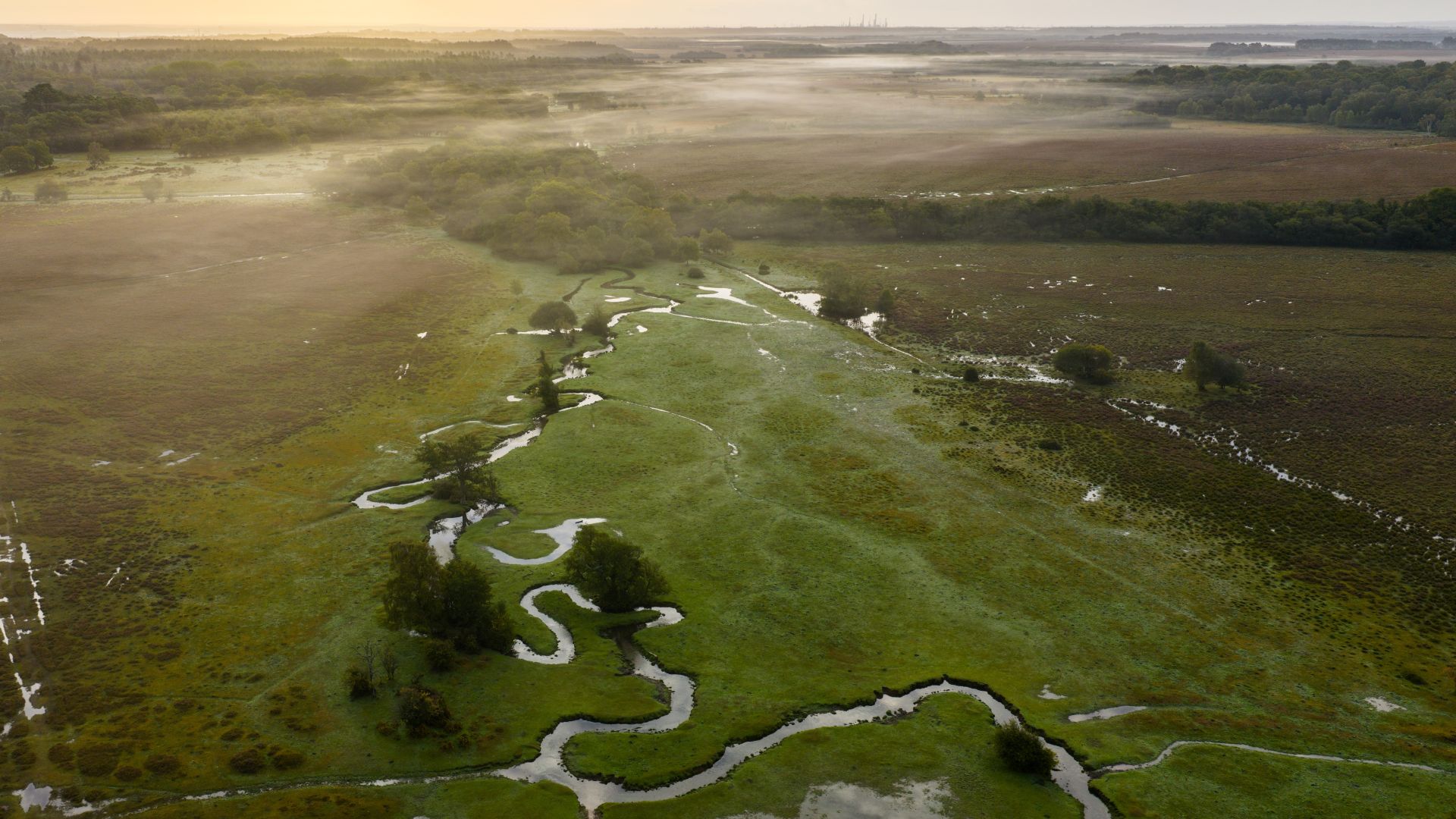
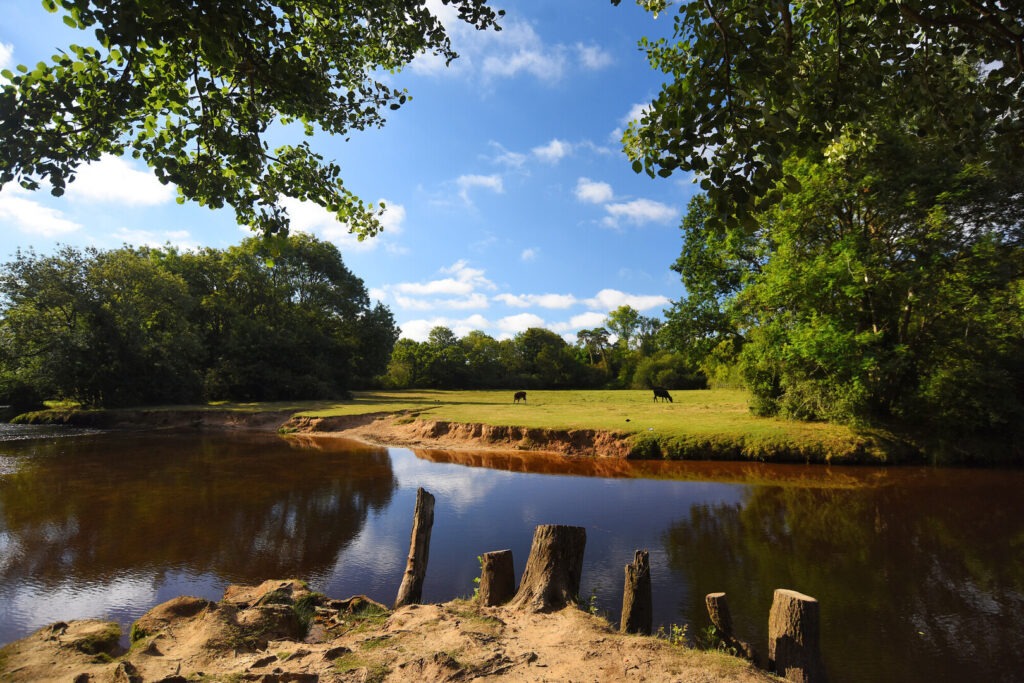
The New Forest contains many small rivers and streams which begin in boggy heathland mires, as well as small lakes, numerous ponds and coastal saltmarshes.
In total there are 32 water bodies, including rivers, streams, brooks and lakes. These range from larger rivers such as Lymington and Beaulieu to shorter streams and brooks such as Sowley Stream and Jacobs Gutter.
Waterbodies draining to the west towards the River Avon form part of the Avon Catchment Partnership and waterbodies in the north of the Forest form part of the Test and Itchen Catchment.
As the New Forest catchment is characterised by a number of shorter, separate and unconnected streams rather than one single river system, the partnership focusses on improvements for individual streams and sub-catchments, working with local people and organisations to pull together coordinated plans of action.
The New Forest is unusual in lowland England due to its large areas of uncultivated land (the Open Forest). This makes it one of the best places to see rich and near-natural freshwater habitats in the UK, one of the reasons why such a high level of protection is given to the landscape.
Unfortunately, the catchment still faces challenges from human activity in its lower reaches, and only three of the 18 waterbodies monitored by the Environment Agency currently meet good ecological standards in those areas. See the New Forest Management Catchment.
What does the Partnership do?
The New Forest National Park Authority hosts the New Forest Catchment Partnership with the Freshwater Habitats Trust.
Over 100 Catchment Partnerships are part of the Catchment Based Approach – a community-led approach that engages people and groups from across society to help improve our precious water environments.
Locally the partnership involves working collaboratively with local communities, landowners and organisations to identify opportunities to improve the health of streams, rivers and lakes.
We can help improve these areas for wildlife by addressing threats such as water quality, quantity and the naturalness of the channel in which the water runs.
The Partnership was one of the first in England and has a particular focus on nature recovery.
Together partners have an impressive track record of delivering projects including:
- walkover surveys of water bodies to map pollution sources
- citizen science water quality testing
- control of invasive species
- on-farm rainwater harvesting
- catchment friendly advice and grants to a range of sectors
- constructed wetlands to filter wastewater
- restoration of wetlands and streams
- creation of new wetland complexes and ponds.
The Partnership champions the New Forest’s special freshwater environment, running regular Water Forum events, providing training to professionals and landowner/managers, and promoting awareness through social media and its e-newsletter, Water News.

How is water quality impacted?
Many pollutants come from diffuse sources (no single source is breaching legal limits but combined they are significant) – we all have a role to play in helping reduce pollution.
Members of the New Forest Catchment Partnership are working with a variety of sectors to identify problem areas most at risk from pollution in the New Forest catchment and then implementing projects to deliver solutions.
Wastewater poses a significant risk to freshwater biodiversity due to the excess pollutants within it, such as nitrates and phosphates. These nutrients can lead to increased algae and plant growth, altering the delicate balance within the ecosystem and suffocating aquatic insects and fish.
Nutrient pollution mainly originates from agriculture such as synthetic fertilizers and animal manures, however effluent from household, industrial, and commercial waste are also significant, particularly for phosphates.
Catchment partners, including Southern Water, have sought to secure increased and accelerated investment to improve the performance of wastewater treatment works and their discharges. We continue to call for the water industry and regulation of the waste environment to better reflect the special nature of the New Forest and the benefits investment in it can bring for people and wildlife.
Not all properties benefit from being able to access mains sewage – some rely on private systems such as septic tanks or package plants to collect and treat their waste. Recent mapping found that around 35% of all properties) in the New Forest are ‘offline’ and their discharge often impact sensitive sites and headwaters.
You can help by keeping your septic tank in good order – find out more here Think Tank.
Reducing the use of detergents containing phosphate, and other chemicals in the home will reduce the strain on New Forest waters, whether you are on mains drainage or other forms of treatment. Blockages in sewers can result in pollution spills.
How we can all help
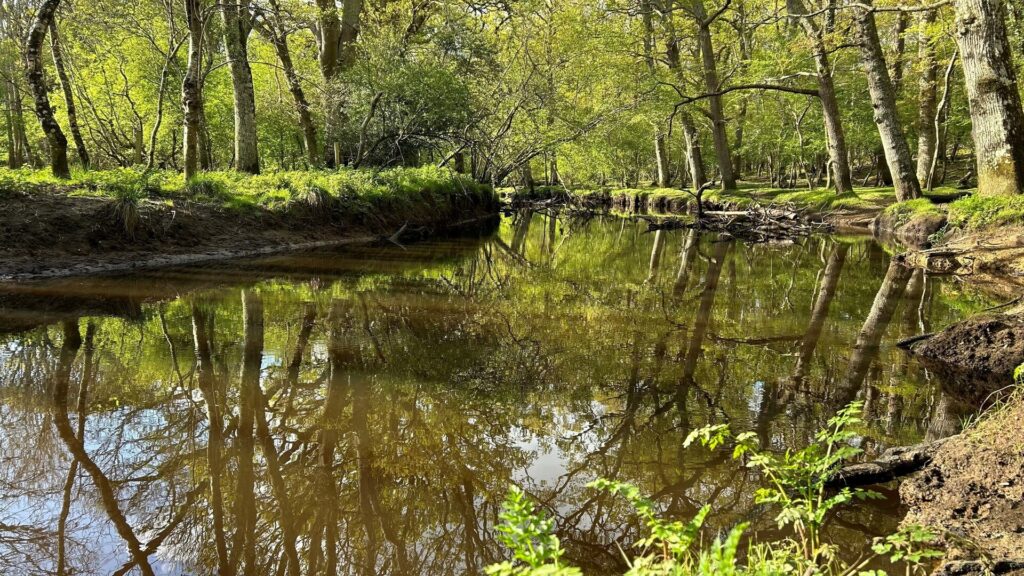
Help improve the water quality of the New Forest’s rivers and streams through these simple tips:
- Use environmentally-friendly detergents
- Ensure correct maintenance of septic tanks
- Avoid spreading non-native invasive plants which push out local species. Or even volunteer to help control non-native invasive species on local rivers and streams
- Avoid wasting water at home and work. The water we use comes from local sources and low water flows can affect wildlife.
- Use the appropriate facilities at your local household waste recycling centre to dispose of engine oil. The disposal of oil or chemicals down road drains causes pollution in rivers
- Manage weeds and slugs in the garden in environmentally friendly ways rather than using chemicals
- Ensure any new building works connect any drainage to relevant systems appropriately. Misconnections of foul drainage into ditches and streams can result in pollution
- If you have space in the garden, why not create a natural pond to provide a home for New Forest species?
Find out more about the work of the catchment partnership
Sign up for the newsletter below on the Freshwater Habitats Trust website or to help deliver projects then please email Ian.Barker@newforestnpa.gov.uk.
Sign up to the newsletter