Heathland plants
Heathland plants
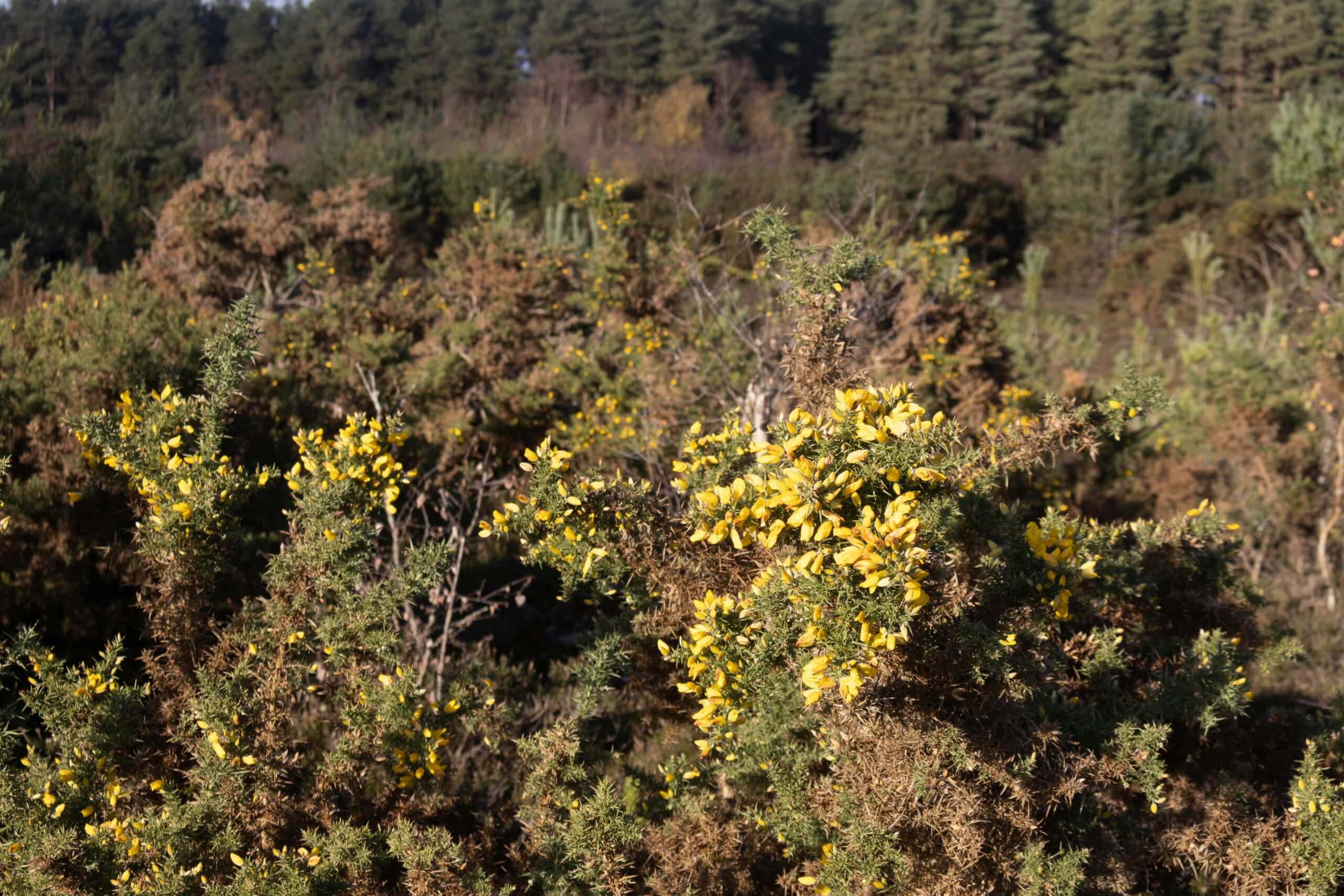
Heathland plants are one of the defining features of the New Forest, shaping its open landscapes and supporting a wide range of wildlife. Species such as heather, gorse and cross-leaved heath thrive in the Forest’s nutrient-poor soils, creating habitats that are both resilient and remarkably rich in life. These plants provide food, shelter and breeding grounds for insects, birds and reptiles, making heathland one of the Forest’s most important ecosystems.
The New Forest’s heathlands are the result of centuries of careful management through grazing, cutting and controlled burning. Without this balance, heathland would quickly be lost to scrub and woodland. Protecting heathland plants means protecting a landscape that depends on both natural processes and traditional practices – and ensuring these distinctive habitats continue to flourish for generations to come.
Bird’s-foot-trefoil
This is a very common plant in any grassy areas of the New Forest, as well as throughout Hampshire and the UK.
In fact it is one of the more common plants of our countryside. Bird’s-foot-trefoil (also called eggs-and-bacon due to the red and yellow colour of the flowers) will grow in any grassland, but it prefers areas that are kept shorter by grazing or mowing.
It can be found flowering in almost all but the longest grasslands from April through to September.
Bird’s-foot-trefoil has many local names in the UK including eggs-and-bacon, cock-and-hens and granny’s toenails!
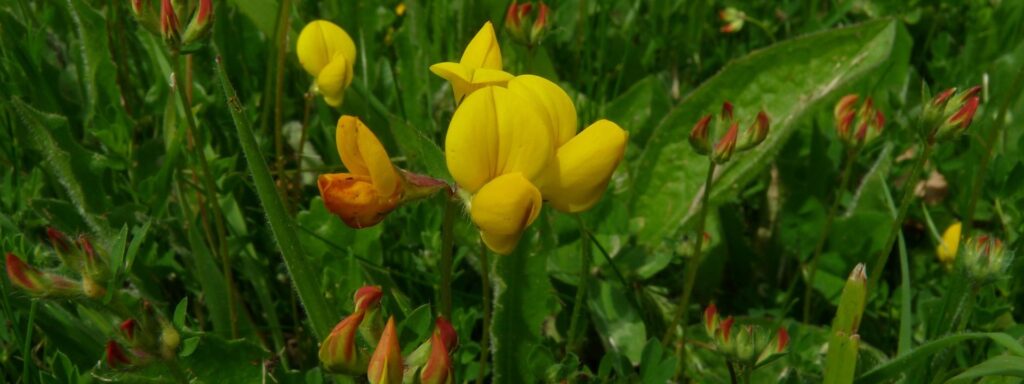
A low growing plant with bright yellow flowers that are often reddish in bud. The flowers are pea-flower shaped and three to six flowers grow together in a small head. The leaves have three leaflets to them and two more smaller leaflets where the leaf stem joins the main stem.
Bracken
Bracken is now abundant in most parts of the UK. It dominates large areas of acid ground such as the Welsh mountains and it can dominate small areas of the New Forest heaths.
Bracken has long been used as packing and padding — it was used as bedding for cattle and a cushioning for breakables during transporting. Now it is used to make bracken mulch for bulking out and aerating garden soil.
Bracken can be found almost anywhere that is uncultivated in and around the New Forest from May until September. Over the winter the dead leaves often cover the ground where it grows.
Gorse
There are two species of gorse that are common in the New Forest.
Common gorse is very common throughout the UK, but dwarf gorse is restricted to the heaths of Dorset, Hampshire, Sussex, Surrey and Kent and is therefore quite rare in the UK.Both grow in the dry, open areas of heathland.
Gorse can sometimes form thickets, but dwarf gorse grows as a low, ground-hugging shrub and mixes in with the heathers. Both species can be found in most open places in the New Forest. Look along the edges of sandy tracks in July and August for the dwarf gorse.As with the heathers, both gorse species will thrive if trees and scrub are kept at bay.
Common gorse does need cutting back if it spreads too densely and starts to shade out the other heathland plants. Common gorse is important for the rare Dartford warbler, which requires it for nesting, foraging and as song perches; areas with gorse are the best places to look for this bird.
Gorse has long been used as a source of fuel for winter fires and the younger shoots were once bruised and used as a fodder crop for livestock in the lean winter months. Gorse flowers can be used to make a dry white wine, but picking them can be painful!
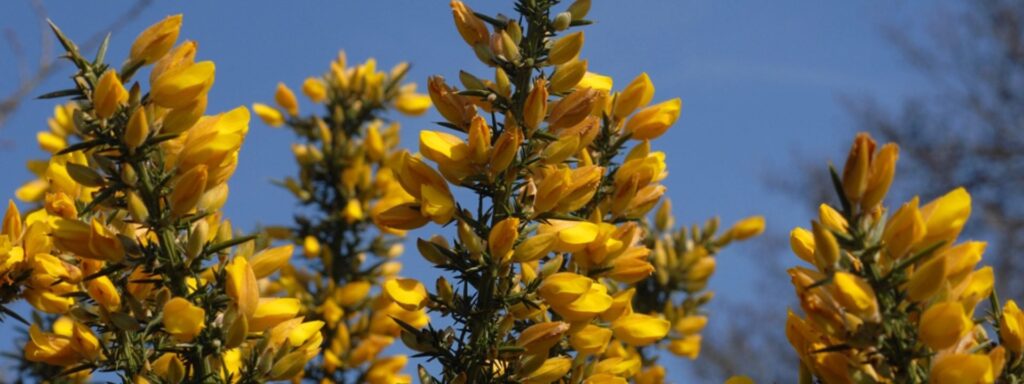
Both species of gorse have green spines and bright yellow flowers. Take note of the flowering time and the height of the plant. Common gorse usually grows as a bush up to two metres tall and flowers mostly in spring. The flowers smell of coconut. The spines on common gorse are thick and robust. Dwarf gorse usually grows along the ground, reaching a height of about 5 cm, and flowers in July and August. Its spines are slender and grow close together.
Heather
Heather is the dominant species of open heathland.
Did you know that the open heathery areas consist of three species of heather? All three are widespread and common through the UK. They are heather (also known as ling), bell heather and cross-leaved heath.
Ling is the most common, recognised by its tiny scale-like leaves and spikes of small, pale purple flowers. Bell heather has needle-like leaves, smooth stems and deeper purple flowers, while cross-leaved heather is similar in leaf shape but can be identified by its hairy stems and clusters of pink flowers at the top of the plant. Together, these heathers help create the colour, texture and wildlife-rich habitats that define the Forest’s heathlands.
Ling and bell heather are found on drier ground, while cross-leaved heath dominates the damper areas. None of these species can tolerate the very wet areas. All three can usually be found growing close to each other and are very common throughout the New Forest.
The heathers thrive on the sandy, nutrient-poor soils as long as trees and scrub are kept at bay. This can be done by grazing, tree clearance or burning. Each method has its advantages and disadvantages, but the most commonly used and the easiest to manage is grazing, with some clearance if trees start to take over. If the trees are allowed to grow, the heathers will disappear under their shade.
Lousewort
Lousewort is widespread throughout the New Forest.
It is common in much of UK except the south-east, East Anglia and the Home Counties where it has declined and is now very restricted due to ‘improvement’ of the damp, rough ground that it favours.
Lousewort will grow in damp open grasslands on acid soils. The damp grasslands and bog edges of the New Forest suit it perfectly. As with many grassland flowers, lousewort requires grazing to prevent the grass getting too long and shading it out. It will also quickly decline if an area becomes too dry; increased drainage of an area can cause it to disappear.
Lousewort is a semi-parasite of grasses, which means that it takes part of its nutrition by tapping into the roots of grasses and stealing their sap. Look for lousewort from May to August in any slightly damp, grassy area of the New Forest.
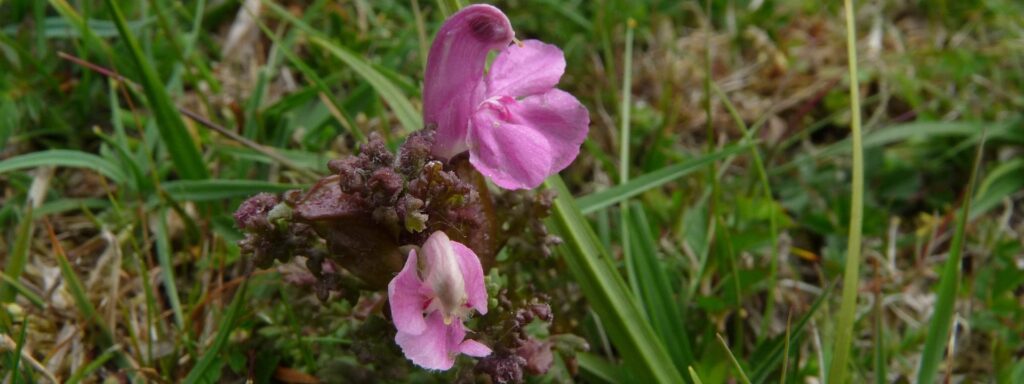
Lousewort has pale pink, almost stalkless, flowers that look as if they come straight out of the ground.
Orchid
Two of the orchids found in the New Forest grow on heathland and more open places.
They are common spotted orchid (Dactylorhiza fuchsii) and heath spotted orchid (Dactylorhiza maculata). Both are quite common and look somewhat similar, with varying amounts of brown spots on their leaves. As with other grassland species, grazing is necessary to keep long grass and scrub at bay and to prevent the orchids from being shaded out.
The common spotted orchid is the taller of the two species.
Heath spotted orchid is the most common in the New Forest and is quite widespread. In the rest of Hampshire it occurs in the north-east heathlands. In the UK it is common and widespread in the south-west, Wales, Scotland and northern England, but it is scarce and decreasing elsewhere.
Heath spotted orchids prefer damper areas, flushes and the edges of bogs. It is quite easy to find in many grassy areas in June and July. Try looking around Beaulieu Road Station and the grassy area of Wilverley Plain, near Brockenhurst. The white to pink-purple flowering spikes can often be seen sticking up above the short vegetation between June and August.
The southern marsh orchid (Dactylorhiza praetermissa) and early marsh orchid (Dactylorhiza incarnata sub-species pulchella) grow in areas of the forest where heathland turns into wetland.
The New Forest has the second largest concentration of the bog orchid (Hammarbya paludosa) in Western Europe, following the West Highlands of Scotland. This plant needs acidic water conditions to thrive and elsewhere in southern England the populations have been severely affected by drainage work. It is yellow-green in colour and at just 3-12cm high is very small and difficult to see.
Petty whin
Petty whin is found throughout the New Forest, but is often scattered and not common.
Elsewhere in Hampshire it has decreased and now only occurs in dwindling numbers on heathland sites in the north of the county. It has also decreased drastically across the UK and apart from the New Forest is found only in eastern Scotland, south Wales and Devon.
Petty whin grows in moist open grasslands and heathland on acid soils. It likes areas where the ground does not get too dry and where the soil is a little richer. The drier fringes of bogs and acid pasturelands are ideal for it. This is a species that definitely requires grazing. One of the main reasons for its decline has been a lack of grazing in many places where it used to grow.
Petty whin flowers in June and July. Many grassy areas, except the closely cropped lawns, will have petty whin. Try looking around Hincheslea, near Brockenhurst, or Pig Bush, near Beaulieu Road Station.
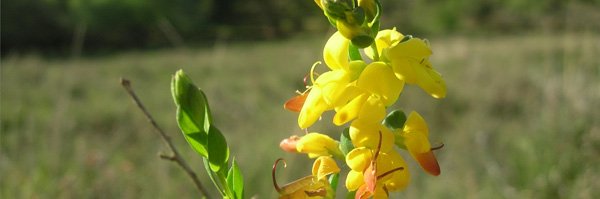
Petty whin has bright yellow pea flower-shaped flowers, small green leaves and long thin spines. It grows as a small, wispy bush up to 75cm tall.
Sundew
Round-leaved sundew (Drosera rotundifolia)
Sundews are some of the most fascinating plants to be found in the New Forest, for they are insectivorous. They are found in nutrient-poor wet soils and the sticky scarlet hairs that cover the leaves are a perfect trap for small insects. This prey provides the nutrients that the plant is missing. Sundews grow about 1 cm tall and bloom in the summer months, displaying a spike of white flowers.
Two other species of sundew are present in the forest: the oblong-leaved sundew (Drosera intermedia) and the larger and comparatively rare great sundew (Drosera anglica).
Each sundew leaf is covered with hair-like tendrils which are tipped by droplets that glisten like dew in the sun, giving these plants their common name. On contact, insects quickly become ensnared and the surrounding hairs bend towards the victim to prevent escape. Eventually the whole leaf curls over to enclose its prey. The dew drops act as digestive juices that dissolve the softer parts of the insect’s body before the resultant liquid is absorbed by the plant.
The sundew has a long history of herbal use: when distilled with wine it was said to have aphrodisiac and strengthening powers, giving rise to its alternative name — youthwort. It was also used in the treatment of whooping cough, bronchitis, asthma and other respiratory complaints.
Tormentil
The yellow flowers of tormentil are a common sight in any grassy area of the New Forest and it is common in acidic grassland throughout the UK.
Tormentil is one of the commonest heathland flowers and will grow in any open area on acid ground. It tends to prefer areas that do not get too dry and where the ground is stable, so short, grazed, open grasslands are the best habitat for it.
As well as occurring in the New Forest, tormentil is common in rough grassland nearer the coast and on the fringes of the Forest where the grass does not grow too long.
Tormentil requires areas to be grazed to prevent grasses getting too long and shading it out. This management favours many other species of grassland flower. You will easily find this plant on almost any grasslands in the New Forest from April through to August.
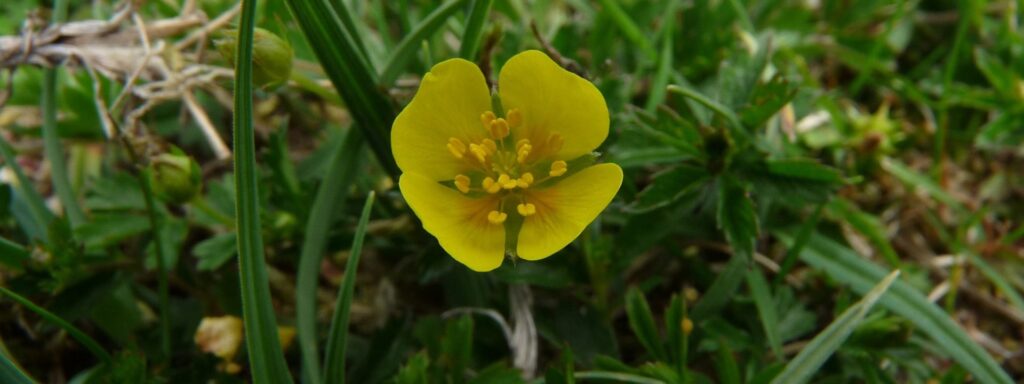
Tormentil is the only yellow, four-petalled flower that has slight notches to the petals. It is a low-growing plant with red stems and smallish toothed leaves.
Wild gladiolus
This is the most spectacular of the New Forest’s floral specialities.
The New Forest is the only place in the UK where it grows and there are between 4 and 5 colonies. Numbers had decreased due to people picking or uprooting them, but populations appear to be stable now. It is more widespread in southern Europe.
Due to its rarity it is fully protected in the UK. In the New Forest, the wild gladiolus has quite a specific habitat. It will only grow on the slightly richer clay soils, often in the company of bluebells and wood anemone, but flowering later than them. It always grows under bracken as this hides it from the grazing animals that seem to have a taste for the dark pink flowers.
Because wild gladioli require a canopy of bracken to hide them, it is important that areas where they grow are not targeted for bracken clearance. Bracken has to be managed in the New Forest because it has increased greatly, shading out many more delicate heathland flowers.
Your best chance of finding wild gladioli is to look under areas of bracken in late June or early July, where you have seen wood anemone and bluebells flowering earlier in the year. They can be very difficult to spot amidst the tall bracken. If you lie down in the bracken, the bright flowers can be more easily seen among the bracken stalks (but watch out for ticks if you do this!).
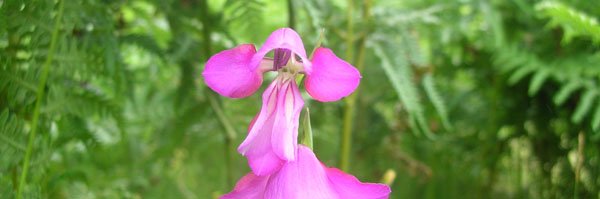
Please note that wild gladiolus is fully protected in the UK, making it illegal to pick any part of the plant or seed or to uproot it. If you do find any, then please let the Hampshire Biodiversity Information Centre (HBIC) know with details of exactly where.
Unmistakable, the plants grow to about 6 cm with the bright flowers at the top third of the plant.