New Forest war-time airfields
Discover the New Forest's war-time airfields
The New Forest played a significant part in the two World Wars including 12 airfields across the Forest, and you can still see evidence of them today. Find out about some of them below and head over to the New Forest Knowledge website for more details.
RAF Beaulieu
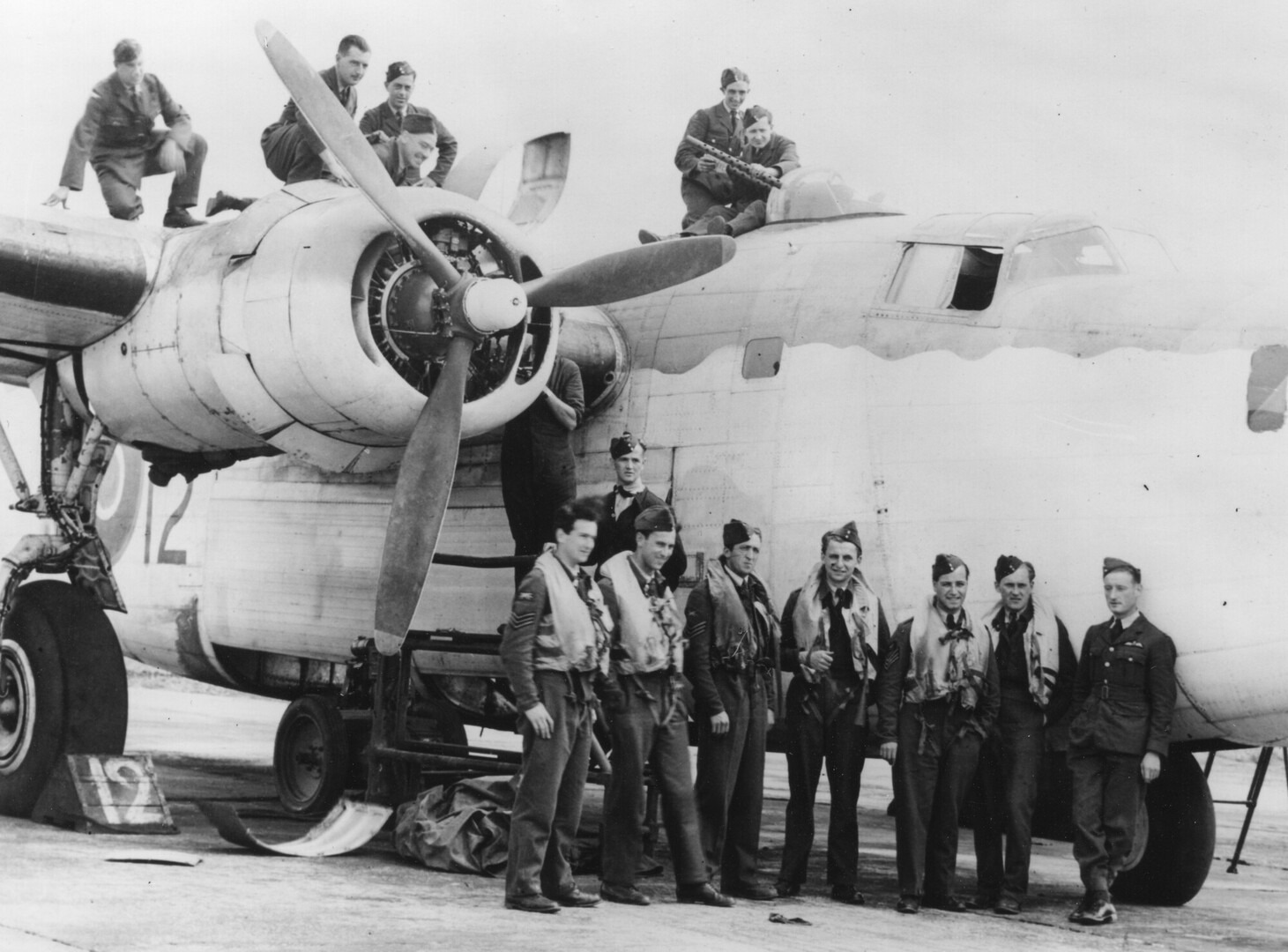
Imagine standing at Beaulieu Heath during the Second World War; the roar of a Liberator aircraft taking off on a mission to track down enemy submarines and the buzz of hundreds of people living, training and flying here.
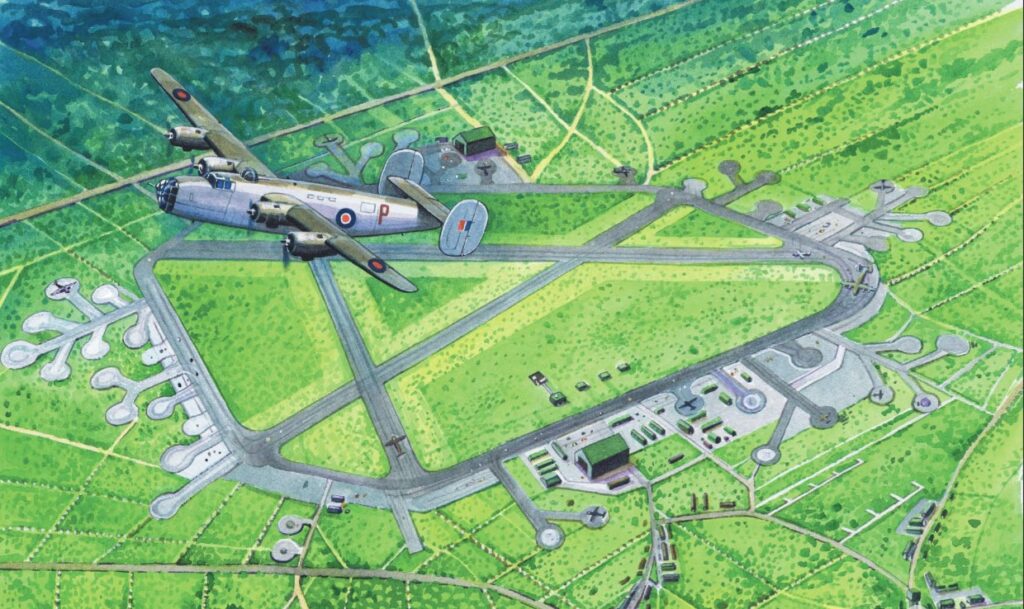
Across the south of England many airfields were built for the war effort. The New Forest was important with 12 airfields in the area. Beaulieu was one of the largest, playing several roles including a coastal command centre, a D-Day fighter base and an early helicopter experiment site.
Opened in 1942 the airfield played its part in the Battle for the Atlantic with both RAF and later Czech squadrons stationed here. Missions left to search out U-boats and protect vital supply convoys.
In early 1944 the RAF flew Typhoons from here; from March to August the United States Army Air Force flew Thunderbolt fighters and Marauder bombers including missions supporting the battle for Normandy.
From late 1944 to 1950 the site was used by the Airborne Forces Experimental Establishment to test parachutes, gliders and early types of helicopter. The site was returned to the Forestry Commission in 1959.
At its height there were three runways, two hangars, ammunition dumps, tens of accommodation blocks and even a cinema and a gym. Many concrete roads and hard standings remain as does the original water tower now used by Roundhill campsite.
East Boldre
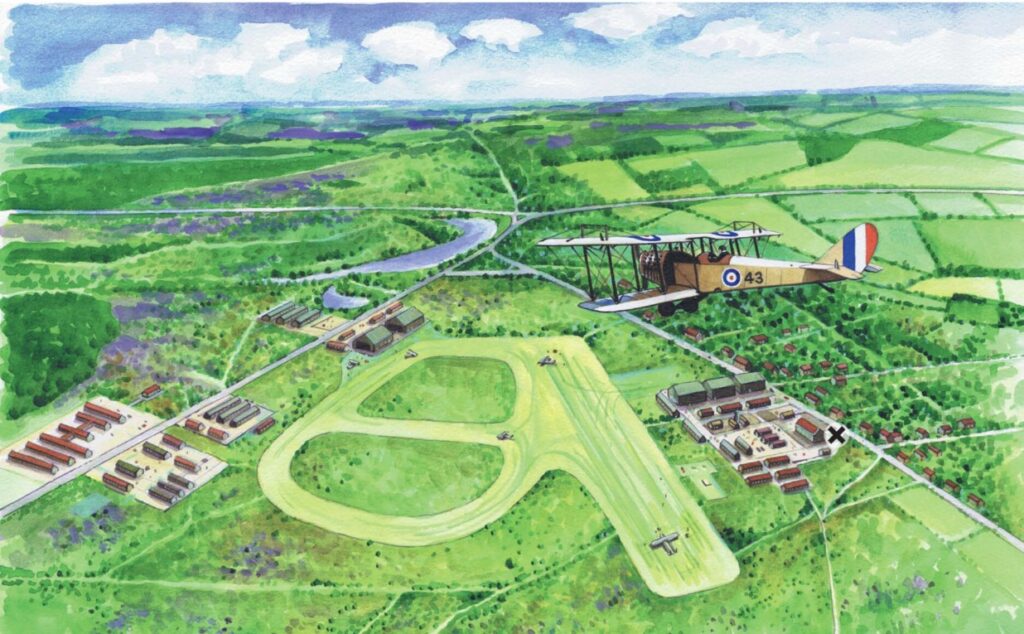
It’s hard to imagine that the area around East Boldre village hall was one of the first airfields in Britain, used as a flying school and later as a training ground for the First World War.
The New Forest Flying School was started in 1910 by two aviation pioneers, William McArdle and the wealthy American John Armstrong Drexel. The runway was a strip of heath cleared of bushes and a flying course cost £80. Aircraft such as the Bleriot XI and the Farman biplane were flown here to the delight of the early pilots and no doubt wonder of the local people.
The school closed in 1912 but in 1915 the First World War prompted the Royal Flying Corps (now the R.A.F.) to take over the airfield for training pilots, ground crew and observers for the Western Front. Aircraft such as the Curtiss Jenny and Sopwith Dolphin were flown. This village hall was built in 1917 and was both an Officers’ Mess and a YMCA.
In 1918 the airfield was enlarged again with accommodation buildings, aircraft hangars, officers’ camp and separate camp for the Women’s Auxiliary Air Force all built along the Lymington to Beaulieu road.
In 1919 flying ceased. The airfield was not used in the Second World War but a much larger base was built on nearby Beaulieu Heath. Between 1945 and 1950 the Airborne Forces Experimental Establishment used East Boldre as a parachute dropping zone.
RAF Holmsley South
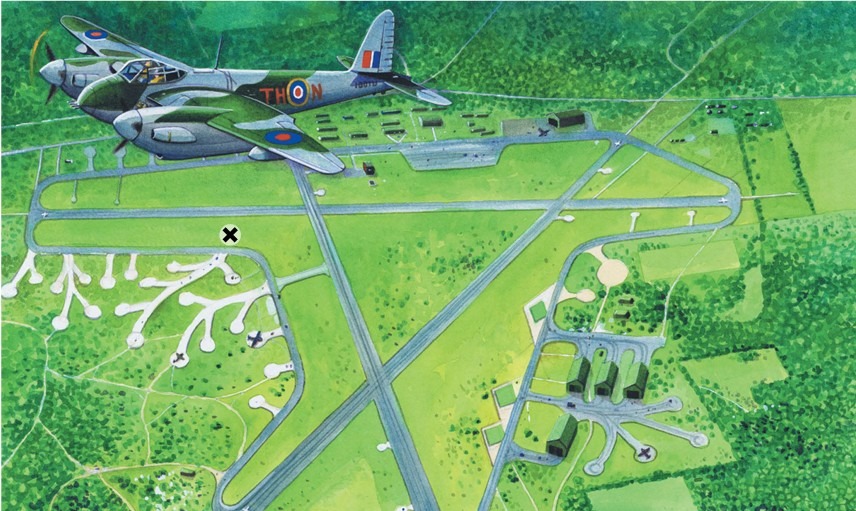
Imagine standing at Holmsley campsite during the Second World War; the roar of a Mosquito aircraft taking off on a dangerous mission to occupied France and the buzz of hundreds of people living, training and flying there.
Across the south of England many airfields were built for the war effort. The New Forest was important with twelve airfields built. Holmsley South was one of the largest with three runways, two hangars and many support buildings and accommodation blocks.
Construction started in 1942 and from October RAF Coastal Command were flying to protect shipping from submarine attack, assisted by USAAF Liberator aircraft. In 1943 glider towing training took place from here in preparation for missions to North Africa. In 1944 D-Day support squadrons included RAF Hawker Typhoons, Canadian Mosquitoes and Polish Mustang fighter-bombers.
In July and August 1944 USAAF Marauder bomber squadrons flew many support missions over France. Towards the end of 1944 RAF Transport Command took over, flying equipment and supplies to Europe, Africa and the Far East and bringing home prisoners of war.
The airfield closed for flying in October 1946. It then housed local families in need of accommodation (known locally as ‘tin town’), before being returned to the Forestry Commission. Holmsley campsite now uses many of the tracks and aircraft bays, and the runways are still visible.
RAF Stoney Cross
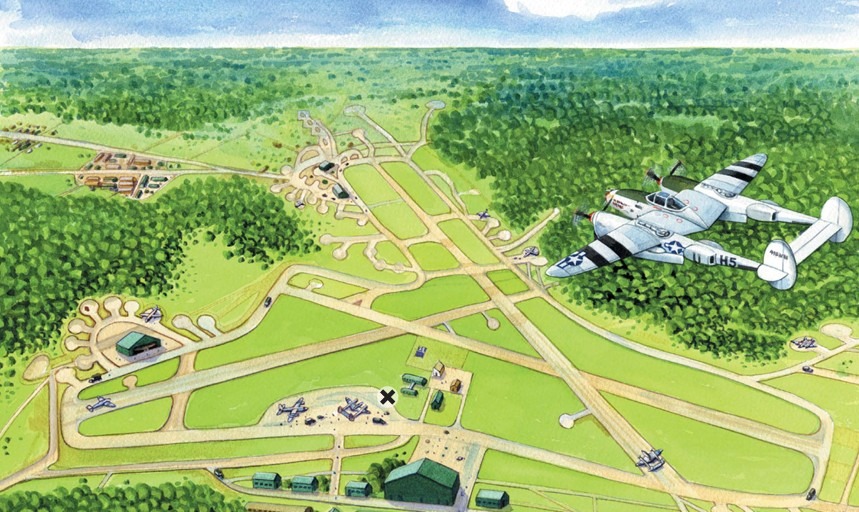
It’s hard to imagine that this tranquil area was once a busy military airfield.
Stoney Cross was one of the largest of the 12 New Forest WWII airfields and construction started in 1942. At its busiest over 1,000 people were stationed here.
First to fly from here were the 123 Wing of the RAF Army Co-operation Squadrons (fighter bombers and photo reconnaissance). The airfield’s main runway was over a mile long, making it ideal for training with glider tugs and troop-carrying aircraft by 38 Wing RAF.
In April 1944, prior to D-Day, the 367th Fighter Group of the USAAF arrived, replaced in July by the 387th Bomb Group. By September 1944 the Americans had moved to Normandy and the airfield was used by RAF Transport Command. Personnel were flown out to India and the Far East.
In 1946 flying ceased. Afterwards the District Council used buildings as homes for local families at what is now Long Beech campsite. Today all you can see are some concrete roadways, aircraft dispersal bays and runway outlines.