Carbon Literacy Training
Training people to make impactful action on the climate and nature emergencies
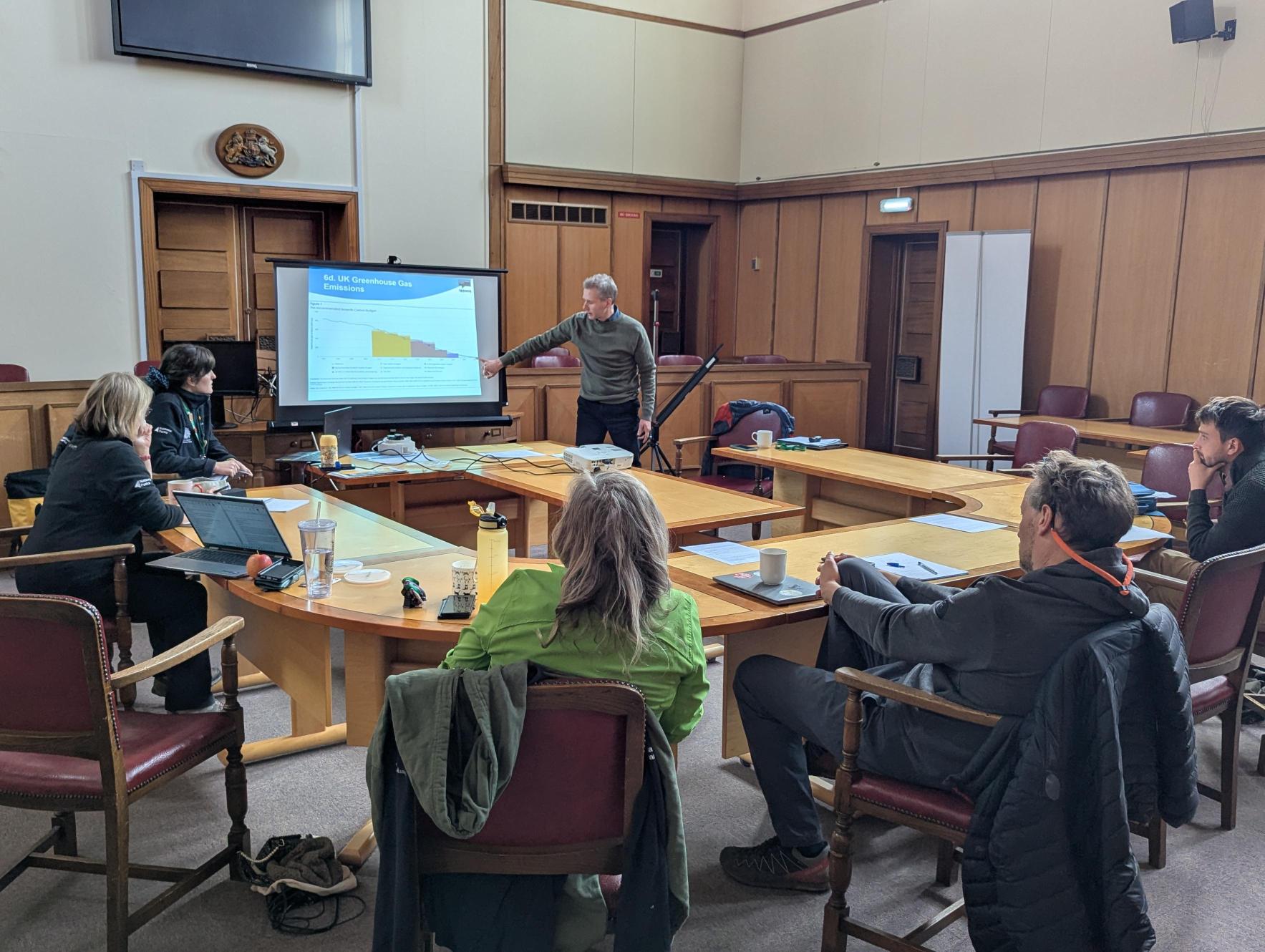
The NPA has delivered specialised Carbon Literacy Training to 60 environmental and community leaders through the Youth for Climate and Nature (YouCAN) scheme, accredited by The Carbon Literacy Project.
Our staff have also received the same training funded through the Department for Environment, Food and Rural Affairs (DEFRA).
I really valued the combination of information, discussion and personal action, so that the time spent learning about often depressing and challenging aspects of climate change were framed in a supportive way, leading towards something that each participant could do individually or with others.
Climate Literacy Training participant
What is Carbon Literacy Training?
Carbon Literacy Training is a globally unique initiative, developed by The Carbon Literacy Project and recognised by the UN at COP21.
We have adapted the training to provide a rounded understanding of the environment and changing climate, and how this impacts the New Forest specifically. Participants also make their own pledges to reduce their own carbon emissions as part of the course.
So far, pledges submitted as a result of the training could save more than 20 tonnes of CO2 or CO2 equivalent emissions per year. This equates to 1.6 people’s annual emissions or somebody driving around the world twice – approximately 50,000 miles. This is also equivalent to the estimated weight of 58 healthy adult New Forest ponies.
Why Carbon Literacy Training matters:
At the start of the YouCAN project, we identified that as a partnership, we had different levels of understanding of climate change and, crucially, confidence in what we did know.
To support the project, and help partners to be in the best position to deliver the most impactful action possible through the project, the New Forest National Park Authority have been delivering an accredited Carbon Literacy Training course to YouCAN partners.
The course helps us to have a shared baseline of understanding of the causes and impacts of climate change, from a global context to the specifics of the New Forest National Park and surrounding areas.
It also covers areas such as the health and well being risks and co-benefits from climate action, global, national and local policy drivers and principles of effective climate communication.
Participants have also been pledging action as a result of attending this course. Actions such as changes to travel habits, adapting diet and making changes to organisational investments and pensions to reduce our greenhouse gas emissions.