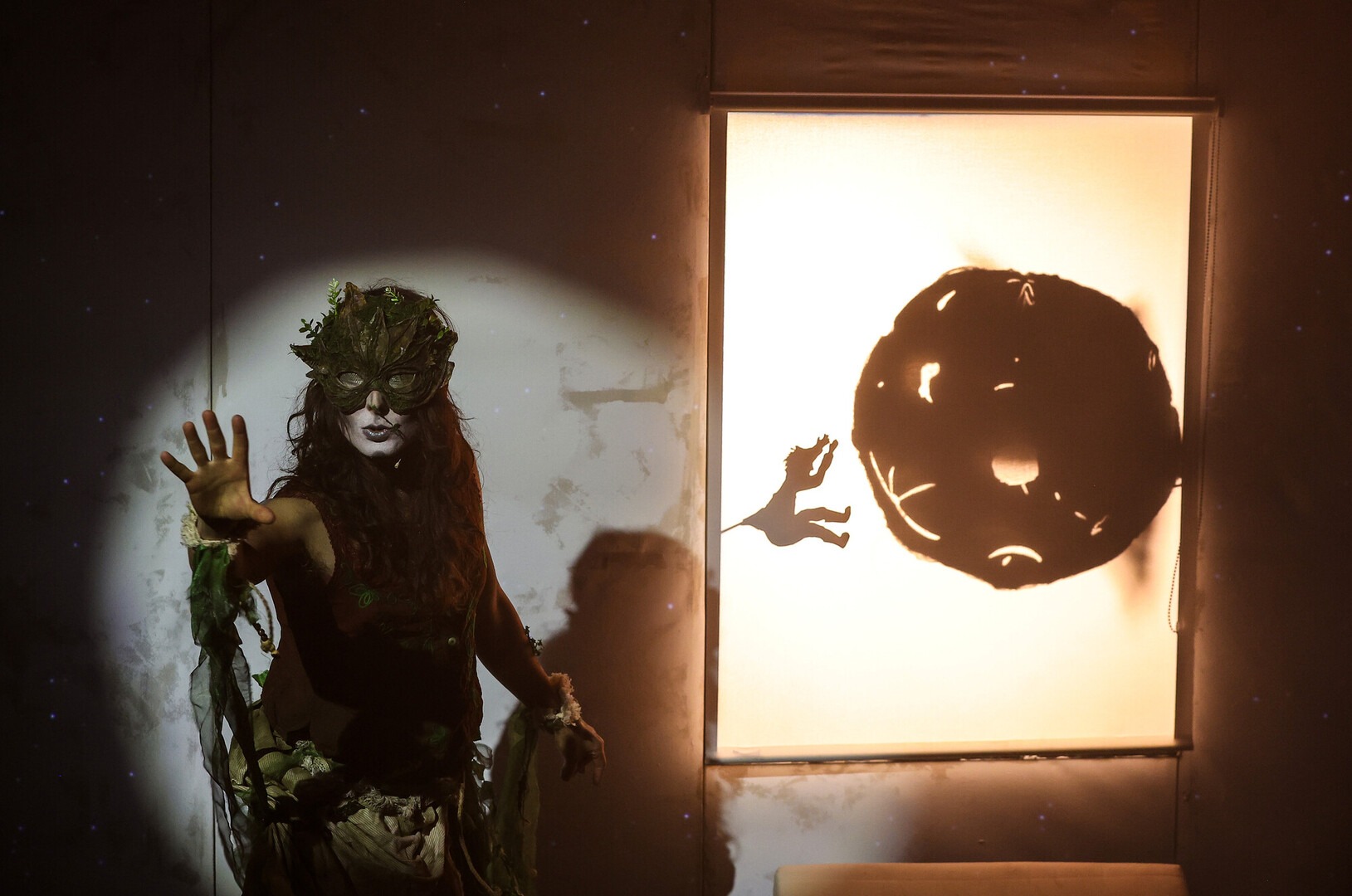
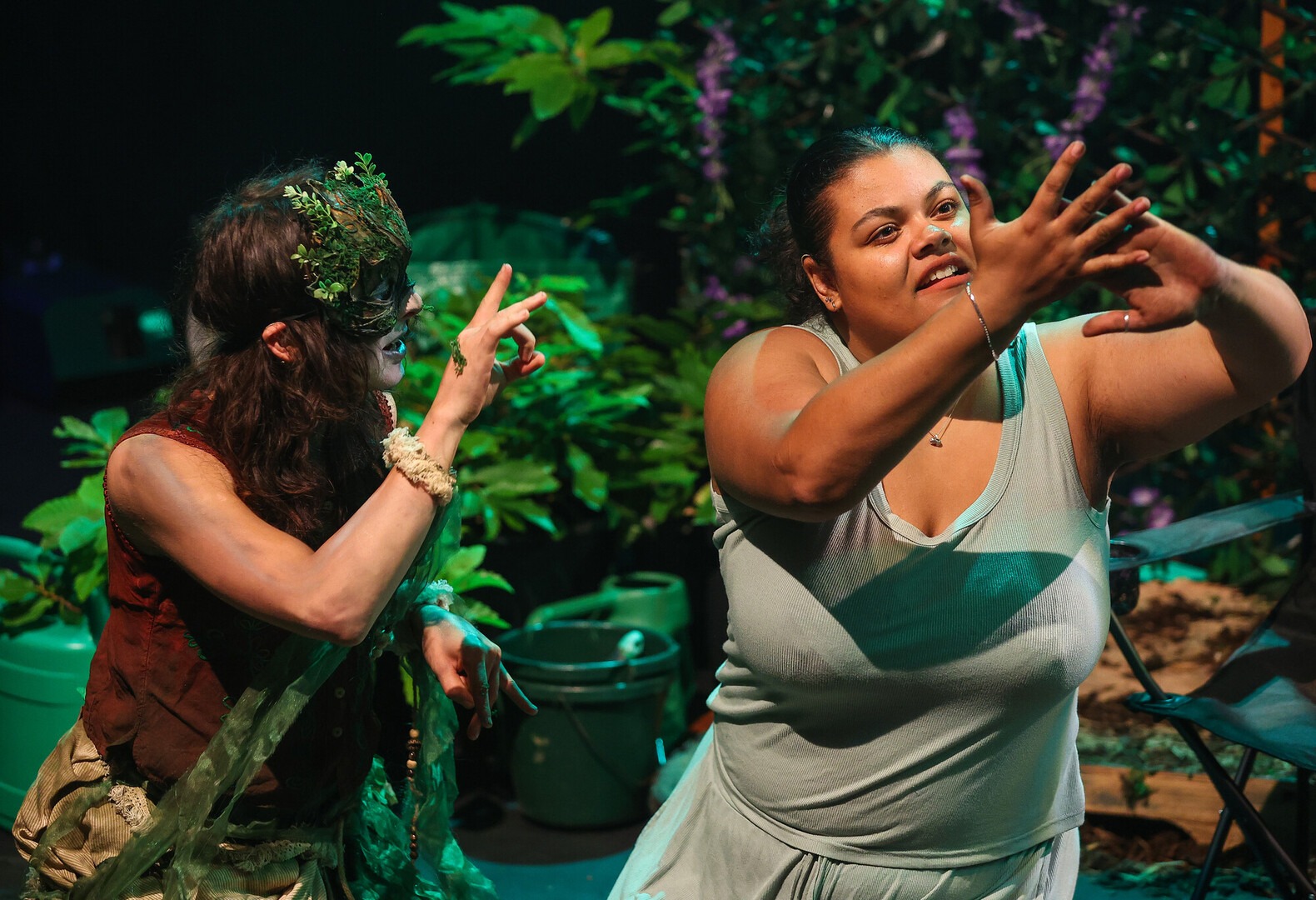
Blending New Forest folklore and the nearby urban landscape of Southampton, Bring the Outside in is a youth-led theatre production championing young people’s views on the climate and nature emergencies.
We caught up with the writer behind the ‘empowering’ and ‘highly emotive’ performance from community arts organisation Theatre for Life, which is touring Hampshire venues from January 2026 following a successful debut show at Southampton’s MAST Mayflower theatre in summer 2025.
Countless testimonies, personal artistic reflections, site specific visits with experts in and around the National Park, and youth consultancy sessions resulted in an abundance of materials for Bringing the Outside In’s cast and creators to pour through.
Originally from the New Forest, the show’s writer Kit Miles lifts the lid on the production’s inspiration and months of research, undertaken by Theatre for Life Artistic Director Michelle Smith and her team.
The playwright and theatre-maker said the insights gained revealed a level of fear – for the future, for loss, and for the effects of air pollution – but also showed young people becoming more confident in taking action when immersed in nature and when they can see the world around them as worth loving and caring for.
Hear from writer Kit Miles below as they share a behind-the-scenes glimpse into the story of Bringing the Outside In:
Q. Can you introduce yourself?
I’m Kit Miles, a playwright and theatre-maker from the New Forest, now based in London. My work on Bringing the Outside In began after I was approached by Michelle from Theatre for Life while working on another of their projects.
She asked me if I wanted to come on board for their newest project about climate action and youth advocacy in the local area and around Southampton. Obviously, I jumped at the opportunity!
The findings from the production’s extensive research were particularly exciting for me having grown up in the Forest – I feel a deep personal connection to its unique and beautiful landscapes.
I was interested in finding a way to bring this kind of inspiration and wonder into a theatrical space, to find a way to let the Forest reach out to those who may never have access to the natural world in their everyday lives.
I fundamentally believe that the best way to engage with our present is by engaging with the past; the stories it holds, and the parallels we can draw across time to where we are today. It is through this ethos that Bringing the Outside In was born.

Q. What is Bringing the Outside In?
Bringing the Outside In is a story about finding personal agency and using love and wonder to inspire us to act. It reminds us that we cannot sustain action through fear or sacrifice, but instead through care and admiration for the world around us.
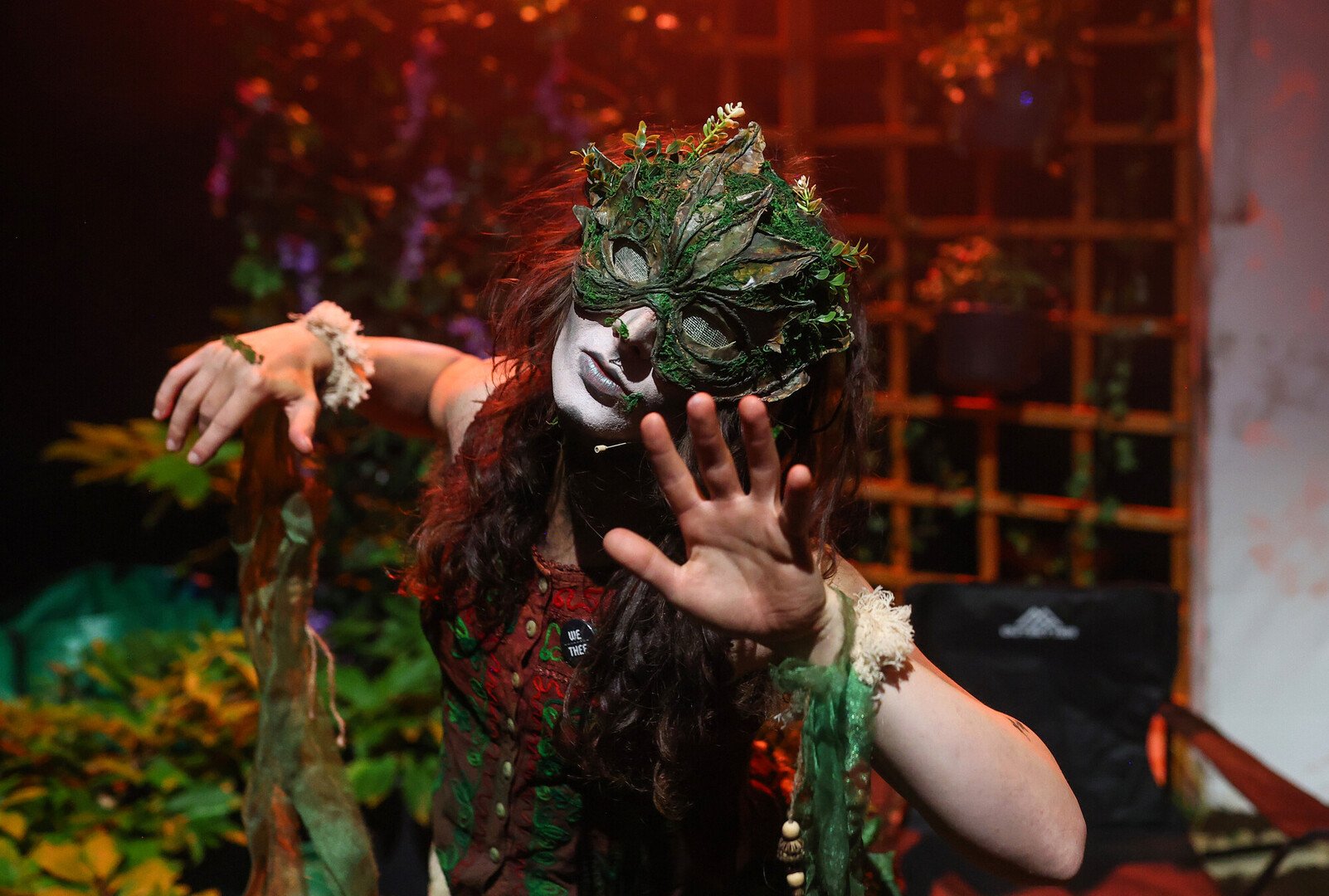
In this, Yerna is both our protector and our antagonist, having spent the last three thousand years protecting the Forest and never asking for help. Now, with the acceleration of the climate crisis, her power is beginning to fade. She is weak and needs somebody else to take the mantle of protector.
When Amber, an anxious asthmatic teenager stuck in a tenement block in Southampton, calls out for someone to save her, Yerna arrives at her window. She shows Amber a world of boundless beauty, but also a world that’s immensely precarious and changing.
Can Amber, as one person, take on the giant task? Or do we, as humans, need to find new ways to find hope and action?
Q. How did New Forest folklore become a key element of Bringing the Outside In?
New Forest NPA member and Chair of the YouCAN partnership board Brice Stratford visited us early in the creative process. He gifted us a copy of his book ‘New Forest Myths and Folklore’ and told us the story of Yernagate – a giant from local medieval folklore who was said to be the protector of the Forest.
In this, Yernagate was visited by an elderly woman who said that a man was cutting down all the trees in the Forest leaving nothing for anybody else. Yernagate approached the man and told him to only take what he needs and nothing more.
But the man did not listen and cut down even more of the Forest. Enraged at his selfishness Yernagate kicked the man to the moon, where he is said to live until this day.
This story inspired us as a team because it seems to be a medieval example of a deforestation narrative, a warning against greed and the consequences of acting selfishly against nature. Yernagate, much like nature itself, is neither gentle nor evil, but acts with the good of the land in mind.
We began to wonder, if Yernagate was around today, what would this giant have to say about the climate crisis? How would this great Forest protector look to us now? Would they be smaller? Older? Would they have lost their power entirely? Would they be desperate?
Yerna, the modern iteration of Yernagate, began to take shape. Wanting desperately to protect their precious land but weakened by the changing landscape and industrialisation. It is in this that Yerna realises that she must take action, take human form and find a new way to keep her beloved forest safe.
Q. What role does New Forest folklore play in Bringing the Outside In?
Stories have historically been our links to other worlds, other cultures, other times, other parts of ourselves that we don’t often get to access. We can use our stories to create empathy, to build bridges, to inspire and educate the next generation to be more caring, more loving, and more generous.
When young people in the research phase creatively engaged with nature they felt more connected and more inspired – that’s the power of storytelling.
Topics like climate action can be deeply scientific and have the potential to cause a great deal of anxiety, especially in young people. So Bringing the Outside In had to speak directly to youth perspectives, engaging at their level and inspiring them to love the world around them with small actions that have a huge impact.
The next challenge was to engage and inspire those young people who do not get the same access to the New Forest or ‘wild’ green spaces or feel alienated. This is where we began to thread folklore into the work.
The story of Yernagate the giant reaches us through thousands of years to show the New Forest as a site of ancient magic and wonder. Maps of the New Forest (for the keen-eyed) will show marks of this story, the physical history and the folktale fundamentally interlinked.
It is through this story that I wanted to pique the interests of young people, get them curious about the New Forest and its secrets, eager to come outside and find the marks of Yernagate for themselves, and maybe be inspired by nature in the process.
Theatre for Life’s Bringing the Outside In is part of the Youth for Climate and Nature (YouCAN) scheme – a partnership project led by the New Forest National Park Authority and supported through a Climate Action Fund grant from The National Lottery Community Fund, which is the largest community funder in the UK.
The YouCAN scheme, made possible thanks to National Lottery players, is aimed at 11 to 25-year-olds to encourage more community-led action to tackle the nature and climate emergencies. It supports green skills and jobs, and an outdoor learning programme for young people from all backgrounds to explore urban, rural, coastal, and freshwater areas.
Find out more about the Youth for Climate and Nature (YouCAN) scheme on our website: https://www.newforestnpa.gov.uk/communities/young-people/youth-for-climate-and-nature-youcan/