Bog flowers
Bog flowers
Bog flowers are some of the most specialised and striking plants found in the New Forest. Growing in wet, acidic and nutrient-poor conditions, these plants have adapted to survive where few others can, creating habitats that are both fragile and incredibly important for biodiversity. From delicate insect-eating species to vibrant seasonal blooms, bog flowers add colour and life to the Forest’s wetlands.
These wetlands play a vital role in storing carbon, managing water and supporting rare wildlife, but they are also among the most sensitive habitats in the National Park. Protecting bog flowers means protecting the health of the Forest’s water systems and the unique landscapes that depend on them.
Bog asphodel
Bog asphodel is very uncommon in southern England, but much more common in the wetter north and west.
The New Forest is a particular stronghold for this plant; it is widespread here and fairly common in many of the wet areas. Bog asphodel also grows on the heaths of north-east Hampshire.
It only grows in wet areas on acid soils, so the waterlogged, peaty areas of bog and valley mire in the New Forest suit it perfectly.
The Latin name for bog asphodel is ossifragum, meaning bone-breaker. It was thought that sheep that ate it got brittle bones, but the condition was actually caused by the lack of calcium in the habitat where bog asphodel grows.
Look for its yellow flowers in July and August in any of the wet valley bogs. A reliable place to find them is Beaulieu Road Heath – look in the wetter areas around the boardwalks.
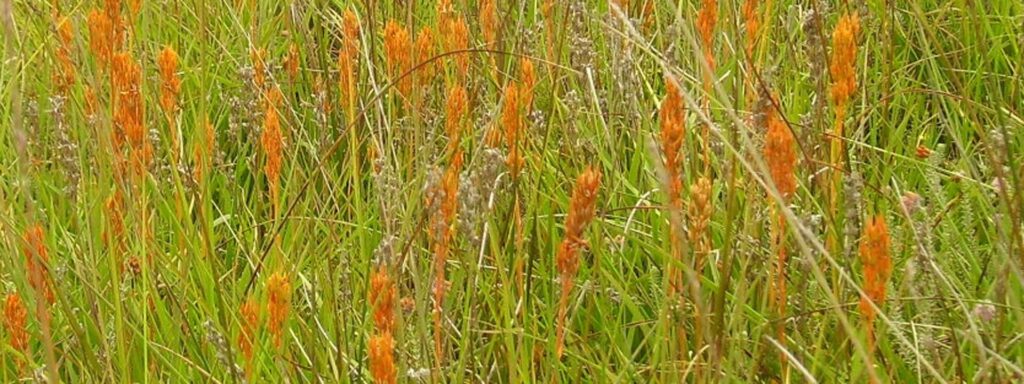
Bog asphodel is the only wetland species to have spikes of six-petalled yellow flowers. In late August and September the seed-heads are a beautiful golden-brown colour.
Bog myrtle
Bog myrtle is very scarce in England, growing only in the New Forest and Dorset heaths, parts of the south- west and a few scattered locations in East Anglia and further north. It is uncommon in Wales, but more widespread throughout Scotland. In the New Forest it is very common and forms large stands in the wettest parts of bogs.
Bog myrtle leaves have a resinous, balsamic fragrance and the plant has had many uses. For example, it was used to flavour beer and to add scent to candles, and it is a very effective traditional insect repellent.
One old name for bog myrtle is ‘sweet gale’ and there are a few places in England named after it, for example Galsworthy in Devon.
The small bushes of bog myrtle are a characteristic feature of the wetter parts of the New Forest and can easily be seen. It produces small, orange-coloured catkins in the spring.
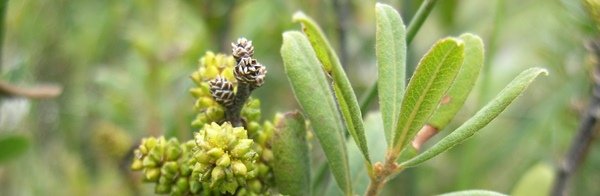
Bog myrtle is a low bush with untoothed leaves. The scent of a crushed leaf is easily recognisable – it smells medicinal or clinical
Bog pimpernel
Bog pimpernel is scarce in much of the UK, only being common in Wales, western Scotland and south-west England. However, it is still widespread in the New Forest.
This plant grows in wet, open meadows and fens. It disappears if sites become too dry or are cultivated, or if scrub and trees are allowed to grow. Grazing greatly helps to prevent the encroachment of scrub.
Bog pimpernel can be found throughout the New Forest – look in any of the wetter, grassy places. The pink flowers are out in June and July.
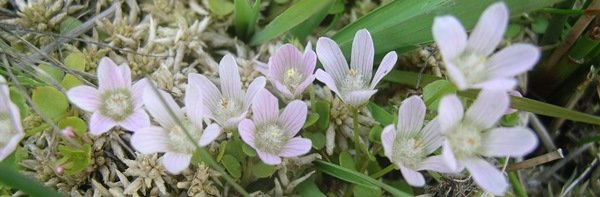
Bog pimpernel is low growing. The flowers are small, pink and cup-shaped with five petals. The leaves are small, rounded and in pairs along thin wiry stems.
Bogbean
Bogbean is uncommon and scattered throughout England, but is more common in the wetter north and western areas, especially Scotland and Wales.
However, in the New Forest it is fairly widespread and can be found in many of the open, well-vegetated pools.
Bogbean is a plant of still, shallow water on acid soils. The edges of open pools, and some wide ditches, are its favoured habitats in the New Forest.
The name bogbean comes from the shape of the leaves which are like those of the broad bean. It flowers in April and May.
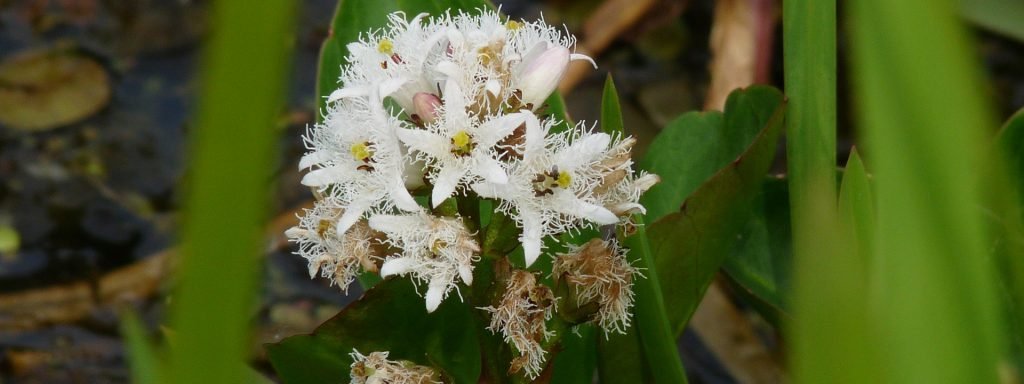
Bogbean is easily recognised by its short spikes of star-like white flowers, which look hairy.
Coral necklace
Coral necklace is a great rarity in the UK: outside the New Forest it is found in only a few locations in Cornwall.
It was first found in the New Forest in 192 and has spread since then.
This species is an annual and it grows in wet or inundated soils on gravelly tracks, pool and ditch margins and in very short damp grassland. It needs bare ground to seed into and will not grow if an area becomes too grassy. Movements of animals and humans help to keep tracks open and disturbed, enabling coral necklace to continue to grow in the New Forest.
The flowers are out in July and August. It now grows on many damp track sides, but a good place to look is on the wetter sections of path around Beaulieu Road Heath.
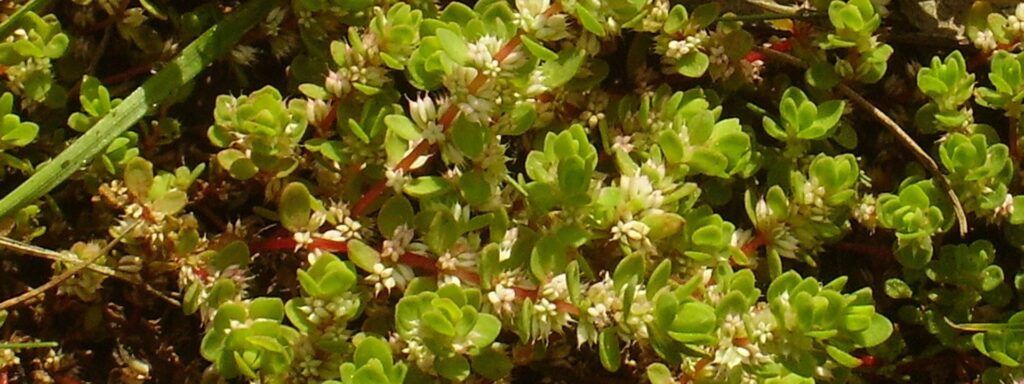
Coral necklace creeps along the ground. The stems are red, the small leaves are green, and the tiny white flowers grow in small clusters just above each pair of leaves. The flowers look almost fluffy and are unlike any other flowers you will see in the New Forest.
Marsh pennywort
Marsh pennywort is widespread throughout the UK, but scarce in the south-east of England, where drainage and development have eliminated many sites.
However, it is still widespread in the New Forest. It will grow in any wet habitats that are not too shaded, but will also tolerate light woodland. You can find it on almost any walk that goes past damp areas – try looking carefully around the edges of Hatchet Pond. The characteristic leaves are present all year and the tiny flowers are out in June and July.
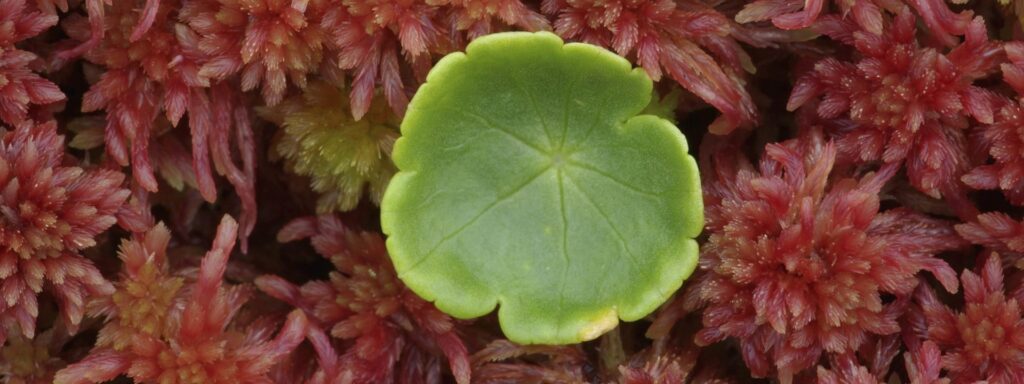
Marsh pennywort is very low growing. It has round leaves with the stem joining the leaf at the centre. Where it grows it looks like a carpet of green coins.
Meadow thistle
The meadow thistle is uncommon in the UK, occurring only in south Wales and southern England.
The New Forest is a stronghold for the species.
Meadow thistles grow in wet meadows and fen areas that are open and sunny. They disappear if sites become too dry or are cultivated, or if scrub and trees grow up and over-shade the shorter plants. It is important that sites are kept wet and either cut for hay or, even better, grazed to prevent the encroachment of scrub.
The thistles are in flower in June and July. They grow in many of the wet, grassy parts of the New Forest, but a good place to look is from the boardwalk at Pig Bush, between Beaulieu village and Beaulieu Road Station.
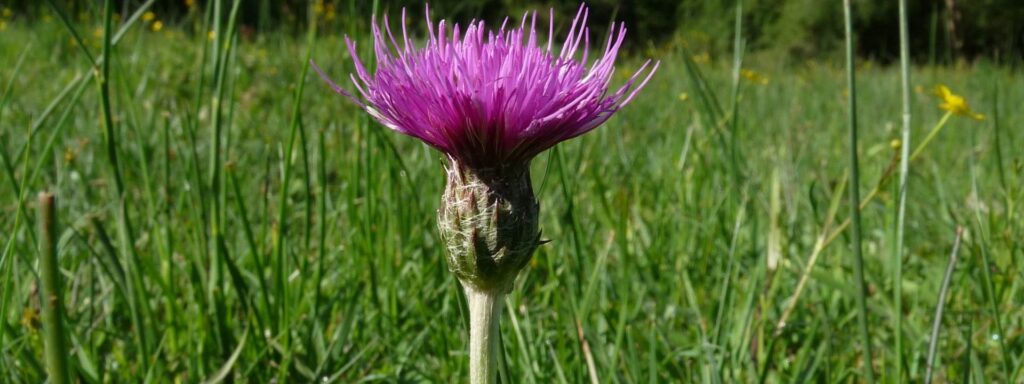
Meadow thistles have the typical purple brush-like flower of other thistles, but they differ from other thistles of the New Forest in only having one large flower at the top of each plant, instead of several. The leaves are sharply toothed but not really spiny or prickly.
Sundews
Although common in the wetter north and west of the UK, sundews are uncommon across southern England. However, in the New Forest they are widespread and popular in almost any wet area. There are three species: the one you see most often is the round-leaved sundew.
Round-leaved and oblong-leaved sundews grow in wet and damp places that have sparse vegetation. They cannot tolerate competition and if grasses invade they may die out. The sides of tracks and pools where the ponies’ hooves continually create small bare patches of wet mud suit sundews very well. The rarest species is the great sundew – this grows in the very wettest areas in the middle of the bogs.
As long as the wet habitats do not dry out or become shaded by trees and there are areas of wet bare soil, sundews will persist.
To find sundews, look open in almost any of the wet, muddy-edged pools or track sides. The leaves are visible at any time of year, and the small spikes of delicate white flowers are up from late June to August.
Sundews are amazing in that they eat insects! They produce blobs of sticky ‘glue’ all over the leaves; insects become trapped in the glue, the plant curls the leaf edges over and releases digestive enzymes that consume the insects, passing nutrients into the plant.
Sundews are low growing plants that are easily told from other plants by the reddish leaves with spots of glistening glue on them. Round-leaved sundew has a round end to the leaves, while oblong-leaved and great sundew have longer, narrower leaves. Great sundew is twice as large as the oblong-leaved.