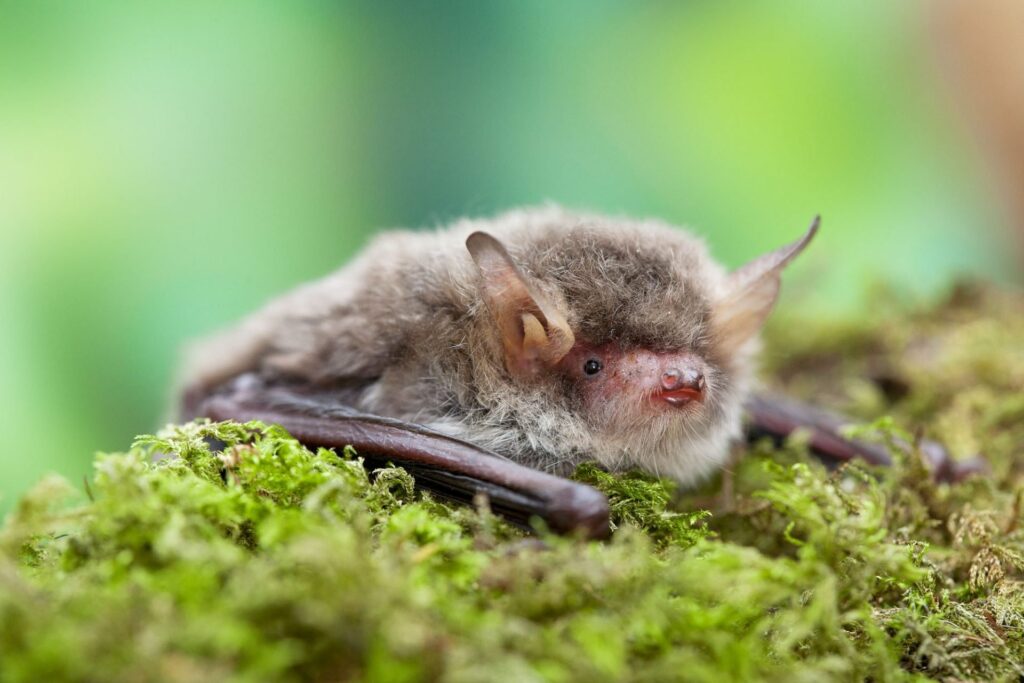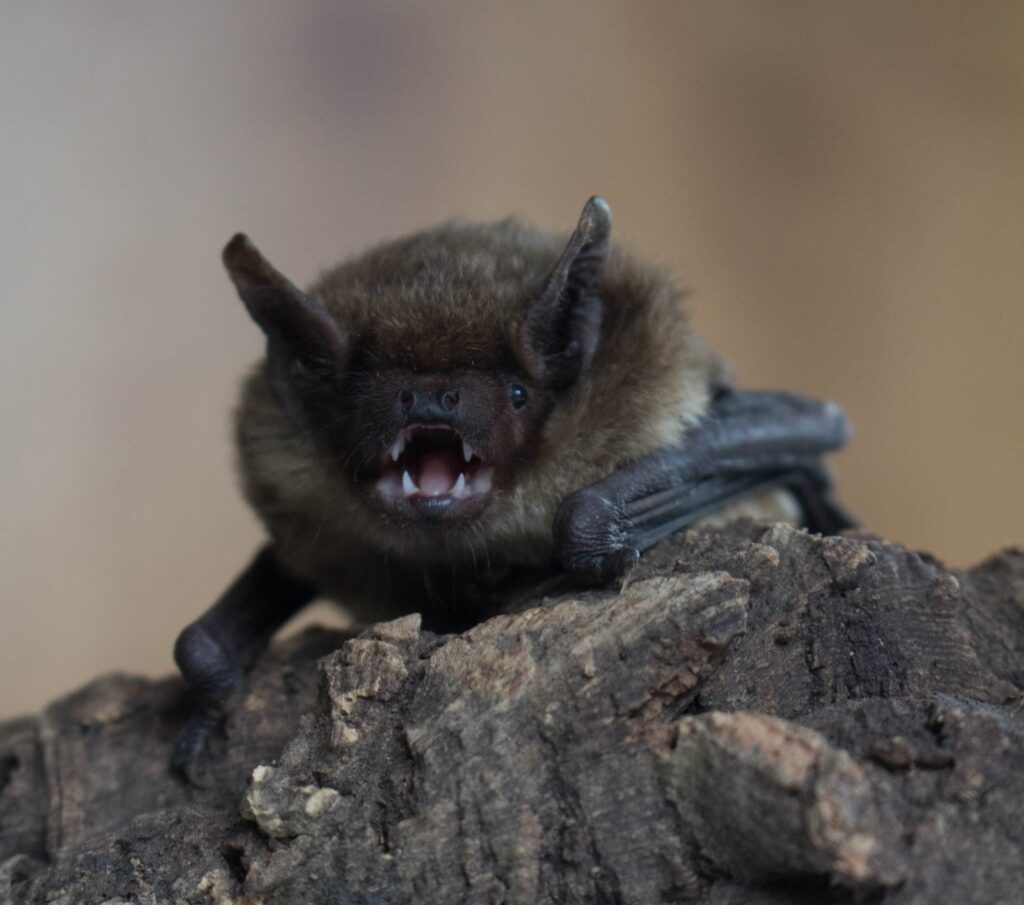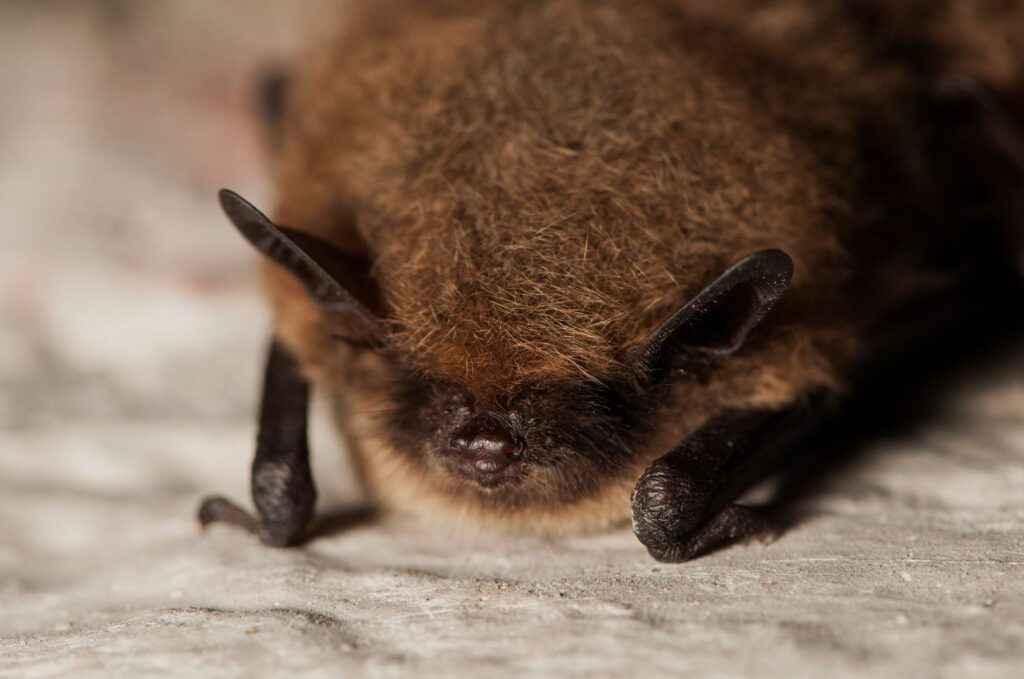

imgi_165_Natterers-Bat-Simon-Colmer-1920×1280

Bats

It's 15:59 Clear sky, 8°C
Scroll

Bats in the New Forest

Bats are fascinating animals, full of many mysteries still left for us to discover. They are a vital part of our native wildlife and their presence indicates a healthy environment.

The New Forest is a stronghold for bats and of the 18 species found in the UK, 14 can be found here. Three are particularly rare: greater horseshoe, Bechstein’s and barbastelle.

Sadly, a quarter of the world’s 1,300 bat species are threatened with extinction, but the good news is that in the New Forest we are working with our partners to protect them.

There are many ways you can help support bats:

Remember, you must hold a bat licence to be able to handle bats. Bats and their roosts are protected by law in this country, and heavy fines can be incurred if their habitat is destroyed or disturbed. Natural England should be contacted for advice if work is likely to affect bats or their roosts.

If you find an injured or orphaned bat in the New Forest, please contact the National Bat Helpline, telephone 0345 1300 228, or report your finding online.

imgi_157_Barbastelle-Bat-Hugh-Clark-FRPS

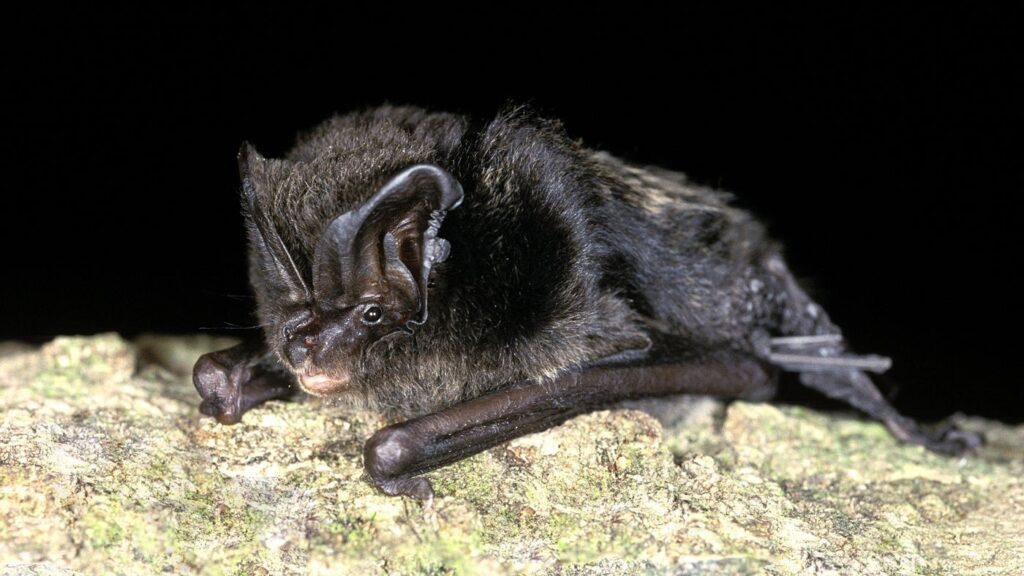
Barbastelle

The barbastelle (Barbastella barbastellus) is a moderate-sized bat and is exceptionally rare.

The barbastelle is found across central and southern England and Wales, though this is an under-researched species so the range could be larger.

Since 2006, three barbastelle breeding colonies have been found across the New Forest. The work undertaken by Hampshire Bat Group is ongoing and further funding has been awarded to conduct additional bat box surveys in areas where it is likely be present.

The barbastelle mainly feeds on small moths, some flies and beetles. Very few breeding sites in the UK are known and it is thought this bat prefers deciduous woodland, wetlands and bodies of water. The extensive loss of deciduous woodland in the UK could be a contributing factor to its rarity.

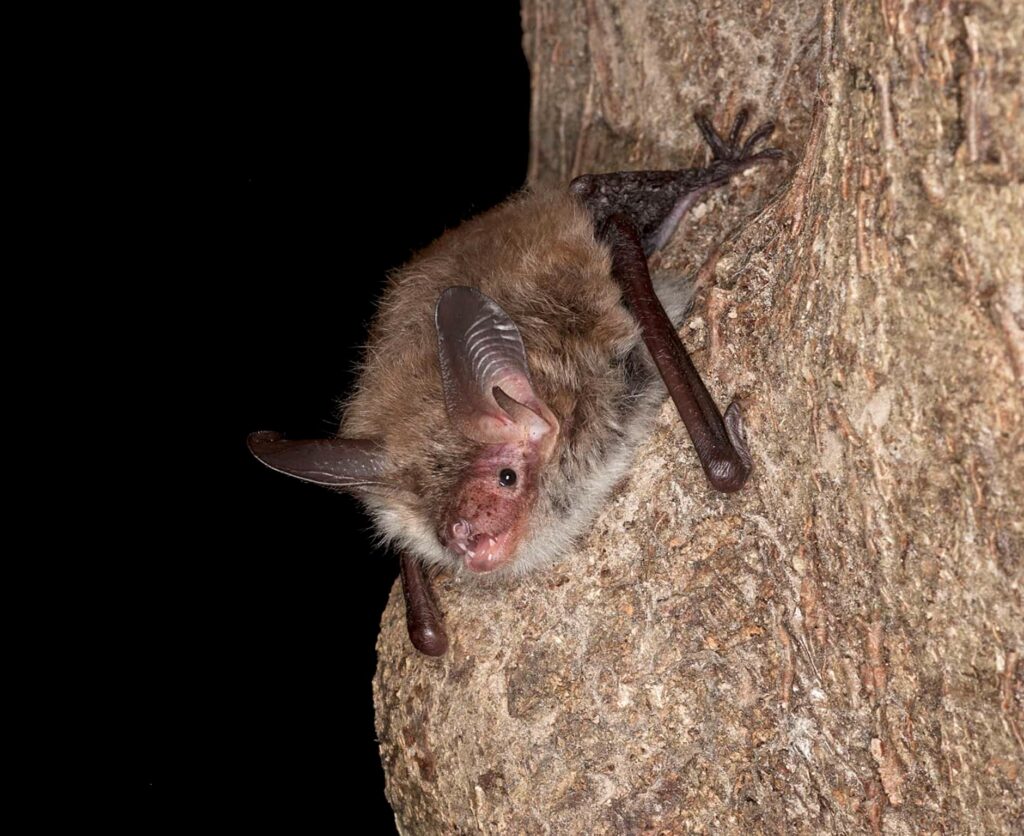
imgi_157_Bechsteins-Bat-Hugh-Clark-Bat-Conservation-Trust

Bechstein’s

The Bechstein’s bat (Myotis bechsteinii) is exceptionally rare and is sometimes called ‘the rarest mammal in Europe’.

It is found in southern parts of England and Wales and, since 2006, four Bechstein’s breeding colonies have been found across the New Forest. Bat box surveys undertaken by Hampshire Bat Group are ongoing in areas that are likely have Bechstein’s.

The bat is part of the Myotis bat genus and almost exclusively relies on woodland for hibernation, roosting and foraging. It prefers oak and beech roost sites and makes the most of holes excavated by woodpeckers. It feeds on most types of insects, including dung flies, grasshoppers and nut weevils.

Large-scale loss of mature deciduous woodland is thought to have significantly affected population numbers. Bechstein’s is a UK Biodiversity Action Plan species, meaning it is a priority on both a local and national scale.

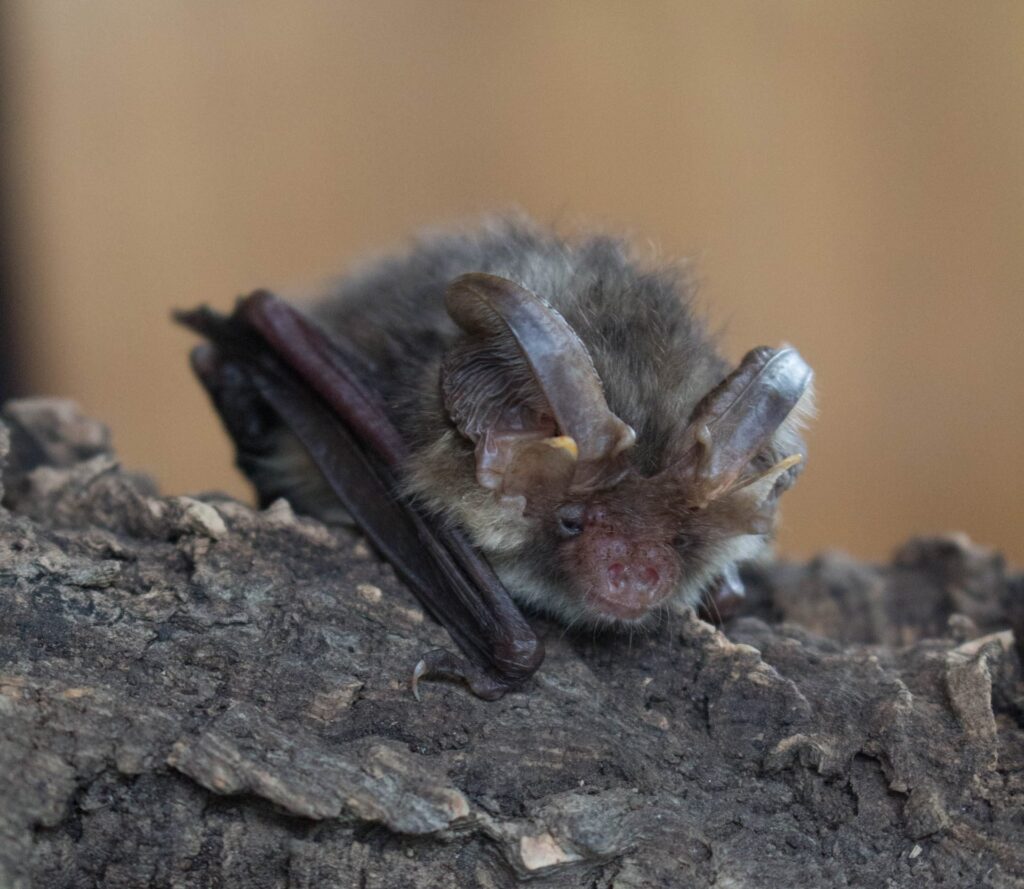
imgi_158_Brown-Long-eared-Bat-Clementine-Pointer-cropped-1920×1667

Brown long-eared

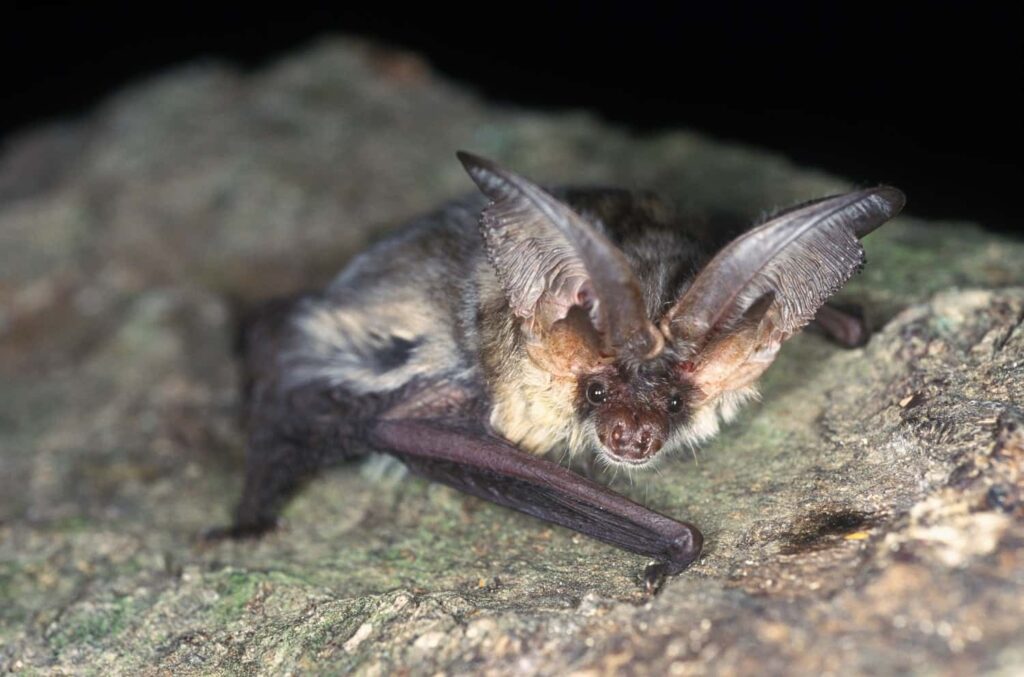
The brown long-eared bat (Plecotus auritus) is a medium-sized bat, with distinctive ears that are nearly the same length as its entire body.

It flies relatively slowly, picking insects from leaves and occasionally landing on the ground to feed. Larger prey are carried to a perch to be consumed more carefully. These behaviours makes it susceptible to predators such as owls.

Summer roosts include houses, trees and barns, whereas hibernation roosts are most likely to be in caves and tunnels. It is usually seen in open woodland approximately an hour after sunset.

The brown long-eared bat is found across most of Europe, except southern Spain, Greece and Italy. It is also present in most parts of the UK, except Shetland, Orkney and other exposed islands.

The population has declined in the UK over the last 50 years as a consequence of habitat loss, largely due to changing agricultural practices and renovation of barns that had previously been roosts.

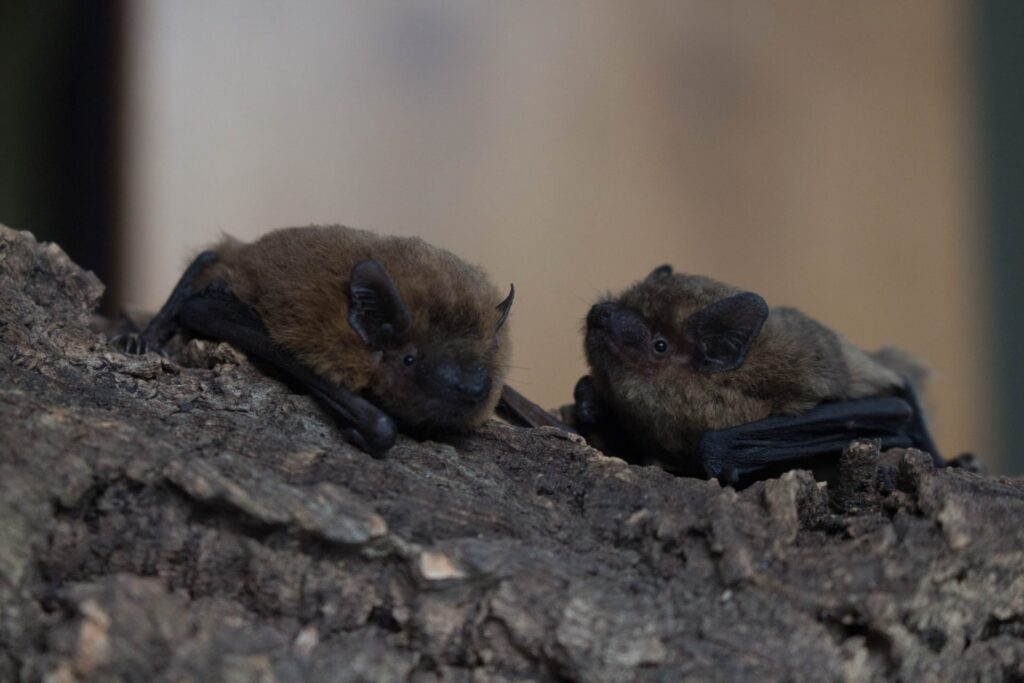
imgi_157_Common-Pipistrelle-Bats-Clementine-Pointer-1920×1280

Common pipistrelle

The common pipistrelle (Pipistrellus pipistrellus) is one of the most common bats in the UK and is regularly seen in gardens.

In the summer, the common pipistrelle can be found roosting in trees and buildings, leaving its roost about 15 minutes after sunset. It is very rarely spotted over the winter hibernation period.

The common pipistrelle is one of our smallest bats but can catch up to 3,000 small insects in a single night.

The common pipistrelle was distinguished from the soprano pipistrelle in the 1990s; its echolocation call (the echoes of a bat’s high-frequency sounds which bounce back, enabling it to work out what’s ahead) is normally best heard at around 45kHz on a bat detector, whereas the soprano calls at 55kHz.

The UK population is recovering, showing an increase in the last 20 years or so; however this is still short of the known population size in the 1950s. Its reliance on buildings for roosting leaves it vulnerable to renovation work and timber treatment chemicals.

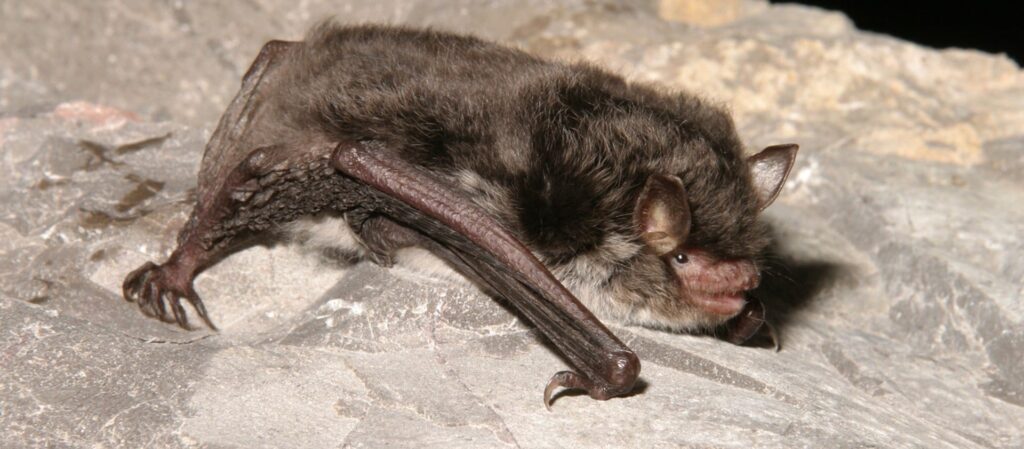
imgi_157_Daubentons-Bat-Hugh-Clark-FRPS-1920×841

Daubenton’s

The Daubenton’s bat (Myotis daubentonii) is a medium-sized bat of the Myotis family and is largely found on waterways across the UK.

This bat is not picky when it comes to summer roosts, as long as the roost is near to its foraging area, using trees, bridges and tunnels. It has been observed sharing roosts with other species such as pipistrelles, noctules, Natterer’s and brown long-eared bats. Hibernation roosts are often in caves, mines and other underground sites, amongst other bat species.

Daubenton’s bat mainly catches insects above water, including midges, caddisflies and mayflies.

Despite huge loss of wetlands and waterways across the country, Daubenton’s appear to be spreading across their range, possibly due to an increase in manmade bodies of water. The removal of trees along waterways could also have a substantial effect on this species.

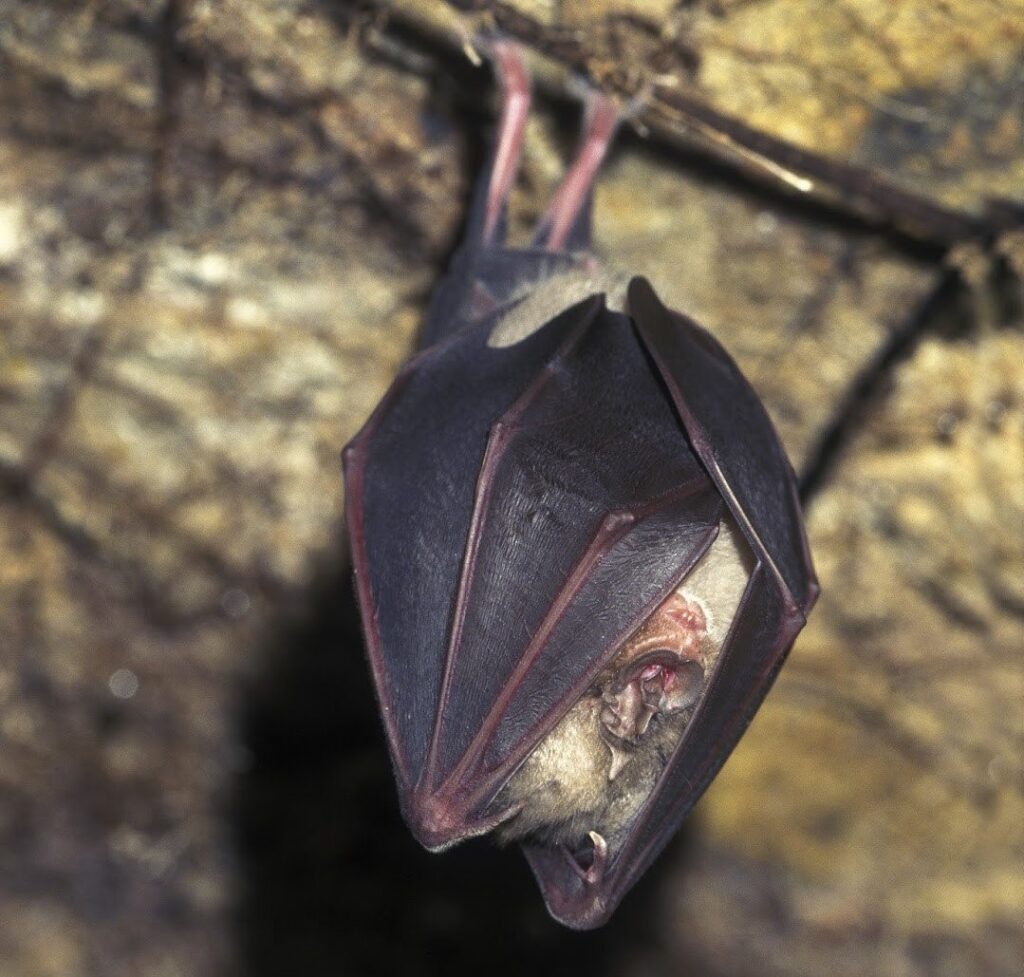
imgi_157_Greater-Horseshoe-Bat-Hugh-Clark-FRPS-crop

Greater horseshoe

The greater horseshoe bat (Rhinolophus ferrumequinum) is one of the larger species of UK bats, approximately the size of a small pear.

This bat is only found in the southwest of England and Wales, the New Forest being on its eastern boundary.

Nursery roosts are found in the attics of old buildings, with the males leaving upon the birth of offspring in mid-summer. Adult females tend to be solitary in winter, returning to the same roost site each year. The greater horseshoe bat’s emergence time is approximately 25 minutes after sunset.

The bat has a distinctive horseshoe-shaped ‘nose-leaf’ which sets  it apart from most of our other bats. Its primary prey are moths and beetles.

It is estimated that the population has declined by approximately 90% in the last 100 years and the greater horseshoe bat is now listed in the UK Biodiversity Action Plan as one of the rarest mammal species found in the UK. The loss of roost sites and feeding areas are the largest threats to the greater horseshoe bat.

imgi_157_Grey-Long-eared-Bat-Hugh-Clark-FRPS

Grey long-eared

The grey long-eared bat (Plecotus austriacus) is a very rare, medium-sized bat, found in the south of the UK.

It is closely related to the brown long-eared bat and it is exceptionally hard to tell them apart. As with the brown long-eared bat, its ears are almost the same length as its body, however, they often remain hidden with only the inner tragus showing.

The grey long-eared bat is only found in the south of the UK whereas, the brown long-eared is also found in the north. Despite the similarities, the grey long-eared bat is thought to feed mainly in meadows, whereas the brown long-eared prefers woodland.

Its summer roost is often in buildings, although it has been observed hibernating in tunnels and caves. Currently the grey long-eared has only been found in Sussex, Hampshire, the Isle of Wight, Devon, Dorset and Somerset.

A population of 1,000 individuals was estimated in 1995 and there is no current conservation plan for this bat, largely due to the lack of information on the species.
imgi_158_Leislers-Bat-Simon-Colmer-1920×1280

Leisler’s

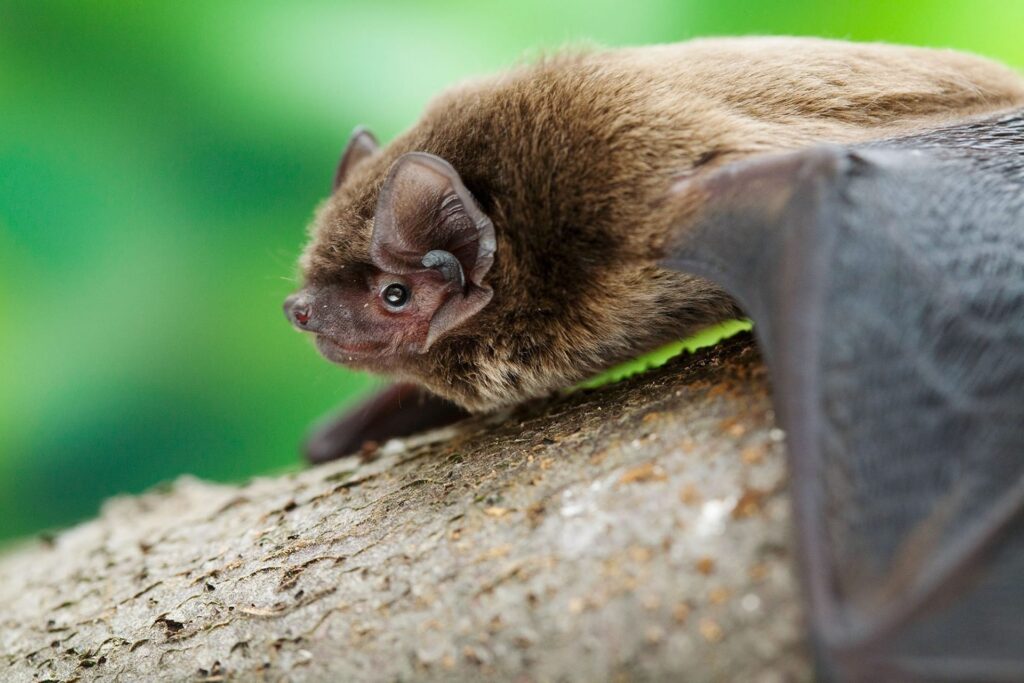
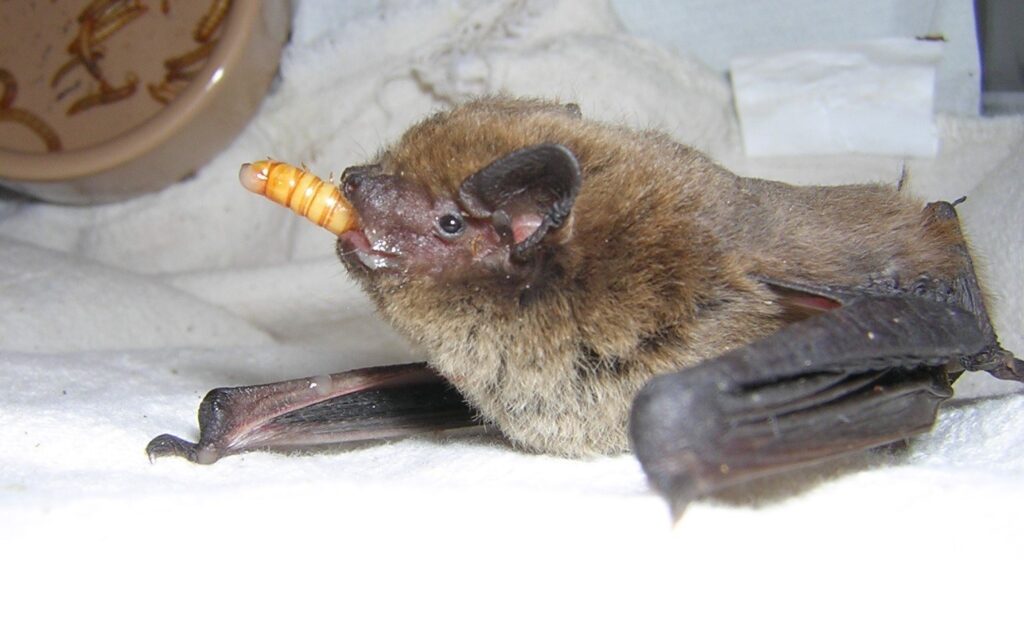
Formerly known as the hairy-arm bat, Leisler’s bat (Nyctalus leisleri) is similar to the noctule bat, but slightly smaller and hairier.

This is a woodland species that is often found roosting in tree holes and, in some areas, has taken to using bat boxes more readily than other species. It has also been observed sharing a roost with pipistrelle and noctule bats.

Its diet consists of flies, moths, caddisflies and beetles, and its call can sometimes be heard by the human ear.

It is a mobile species, often occupying one roost for only a few days before moving on to the next roost site.

Leisler’s bat is found across the UK, with Ireland acting as a stronghold.

imgi_157_Nathusius-Bat-Amanda-Millar-crop

Nathusius’ pipistrelle

A similar bat to the common and soprano pipistrelles, the Nathusius’ pipistrelle bat (Pipistrellus nathusii) is a migratory species across Europe.

The Nathusius’ pipistrelle is a woodland bat found widely across the UK and feeds mainly on midges and flies.

It will roost in trees, buildings and crevices. It has also been found sharing a roost with other pipistrelle species and Brandt’s bats. It is easily mistaken for the other two pipistrelles, although it is slightly larger.

This species is potentially far more common than data has previously suggested, although research is limited.

It is at low risk for extinction worldwide and is previously thought to be a visitor to the UK. Over time it has occurred more frequently, potentially due to climate change.

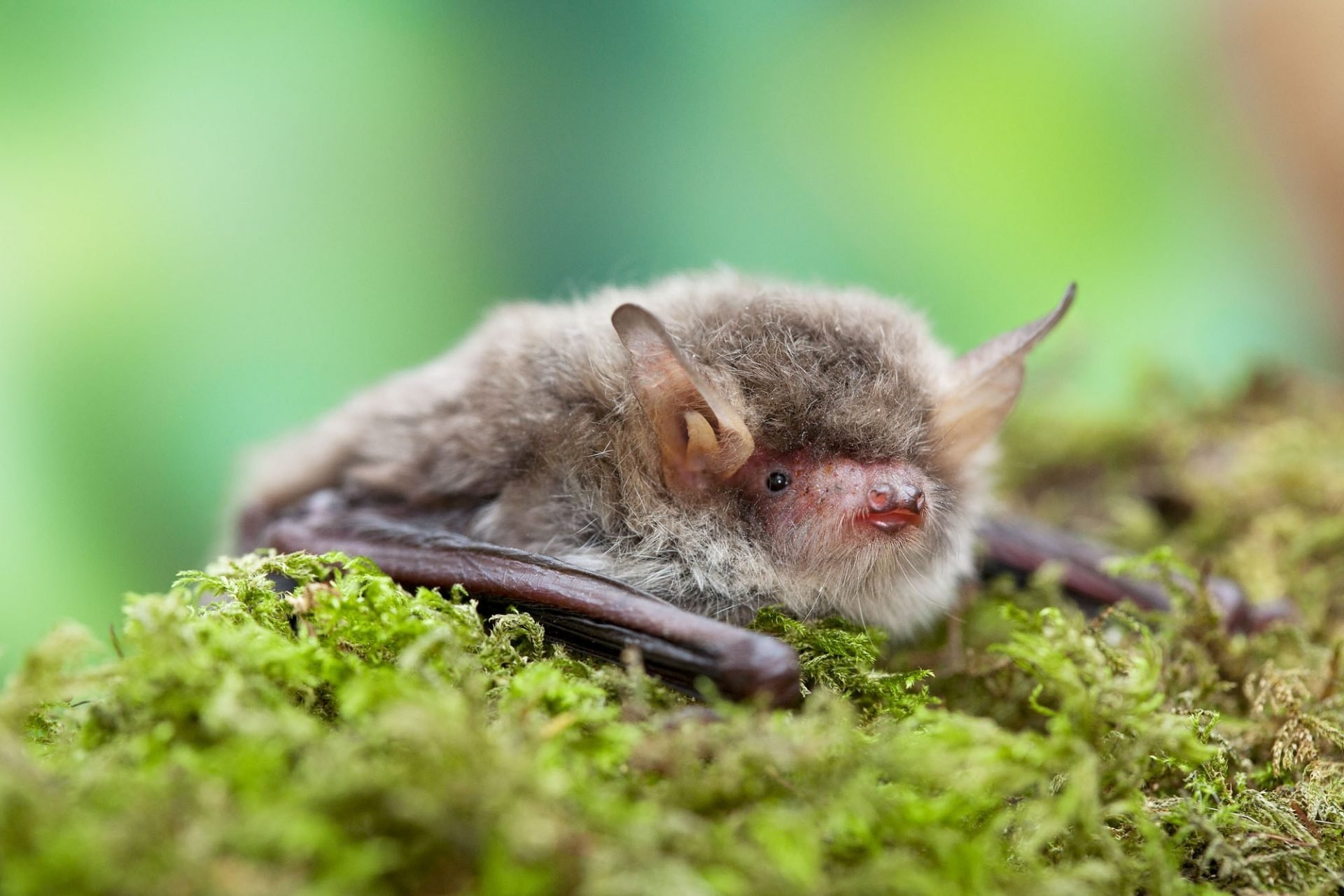
imgi_157_Natterers-Bat-Simon-Colmer-1920×1280

Natterer’s

The Natterer’s bat (Myotis nattereri) is part of the Myotis bat genus, found in woodlands across the New Forest.

Although widespread across the UK, it is significantly less common than the pipistrelles, and the population here is of national importance.

The Natterer’s bat is a poorly known species. It roosts in trees in the summer, changing roosts more regularly than other bats and often utilises old buildings and churches rather than standard houses.

In winter, the Natterer’s bat will hibernate in caves and abandoned quarries. Flies, particularly midges, are the main food source for this bat.

The British population was estimated at 100,000 in 1995 and is thought to be stable. Ongoing felling and treatment of timber are threats to this bat.

imgi_157_Serotine-Bat-Clementine-Pointer-crop-1920×1697

Serotine

The serotine (Eptesicus serotinus) is one of the UK’s largest bats, and one of the first bats to emerge after sunset.

Serotines prefer to roost in buildings. They occur mainly in the south of England and the very south of Wales.

They are similar to the noctule, in that they are one of the larger bats found in the UK and are one of the first bats to emerge.

Males are solitary throughout the year, but females often roost together, sometimes with pipistrelles.

The species is in decline, potentially due to the loss of habitat for their main food sources: beetles and chafers. A loss of older buildings also means fewer roosting sites are available.

Their population is thought to be declining, with an estimation of 15,000 individuals in 1995. It is thought their range is extending northwards and that they are at a low risk of extinction worldwide.

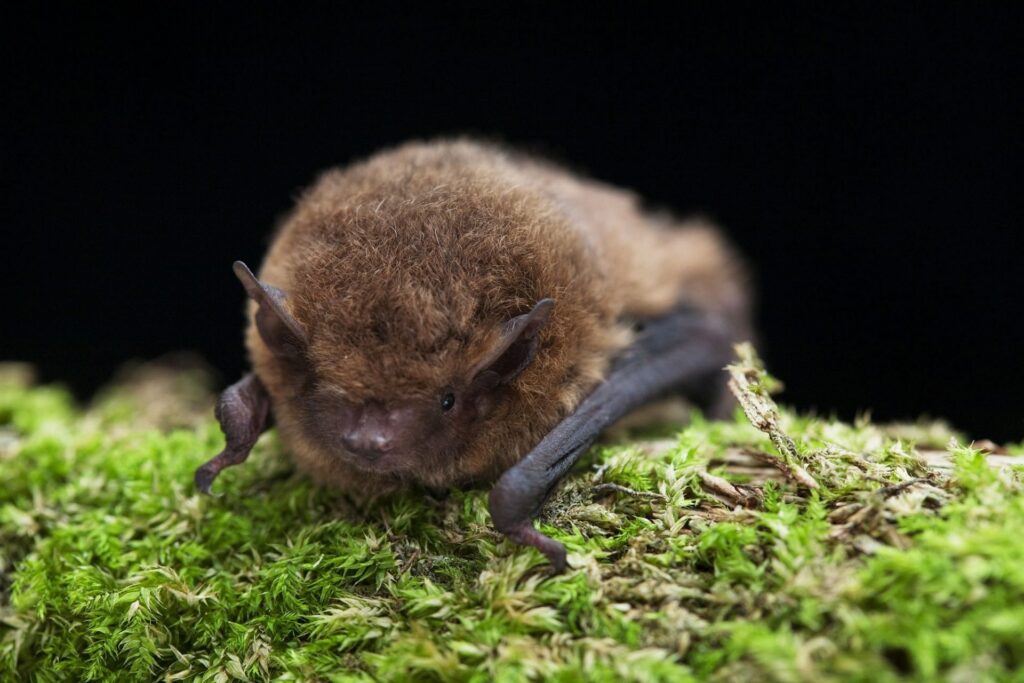
Soprano pipistrelle bat on green moss, close-up showing brown fur, ears, and folded wings

Soprano pipistrelle

The soprano pipistrelle bat (Pipistrellus pygmaeus) is one of the most common bats in the UK and is seen regularly in gardens.

Widespread across the UK, but not found in the north of Scotland, the soprano pipistrelle is one of our smallest bats but can catch up to 3,000 small insects in a single night.

Its echolocation call (the echoes of a bat’s high-frequency sounds which bounce back, enabling it to work out what’s ahead) is normally best heard at around 55kHz on a bat detector, compared to its close cousin the common pipistrelle at 45kHz. These two types of bat were only identified as different species in the 1990s.

In the summer, this bat can be found roosting in trees and buildings, leaving its roost 15-20 minutes after sunset. It’s reliance on buildings to roost leaves it vulnerable to renovation work and timber treatment chemicals.

The UK population has declined by around 55% since the 1960s, however it is thought that the population has since stabilised.

imgi_157_Whiskered-bat-shutterstock-image

Whiskered

Like Brandt’s bat, the whiskered bat (Myotis mystacinus) is found in low numbers across England and Wales.

It belongs to the Myotis family and is extremely difficult to distinguish from Brandt’s bat. The two species were only separated in 1970, and Brandt’s bat has not been recorded in the New Forest. Its distribution remains uncertain due to this similarity, but it is thought to be widespread though uncommon across England and Wales.

Whiskered bats usually roost in buildings but are also found in trees. Summer female roosts typically contain 30–70 individuals. In winter, roosts are often near cave entrances, though crevices are also used.

The species has been observed roosting alongside Brandt’s bat in separate colonies and emerges around 30 minutes after sunset.

The breeding population was estimated at 40,000 in 1995 but is believed to have declined since. Despite this, the whiskered bat is considered at low risk of global extinction due to its wide range across Europe and Asia.

Keep your distance from the animals and don't feed or pet them - you may be fined.

Keep your distance from the animals and don't feed or pet them - you may be fined.

Keep your distance from the animals and don't feed or pet them - you may be fined.

Keep your distance from the animals and don't feed or pet them - you may be fined.