A team of volunteers has planted 250 trees for a nature recovery project in the New Forest.
It is hoped the actions will transform what was once a rather barren and quiet area into a thriving environment for species and wildlife populations.
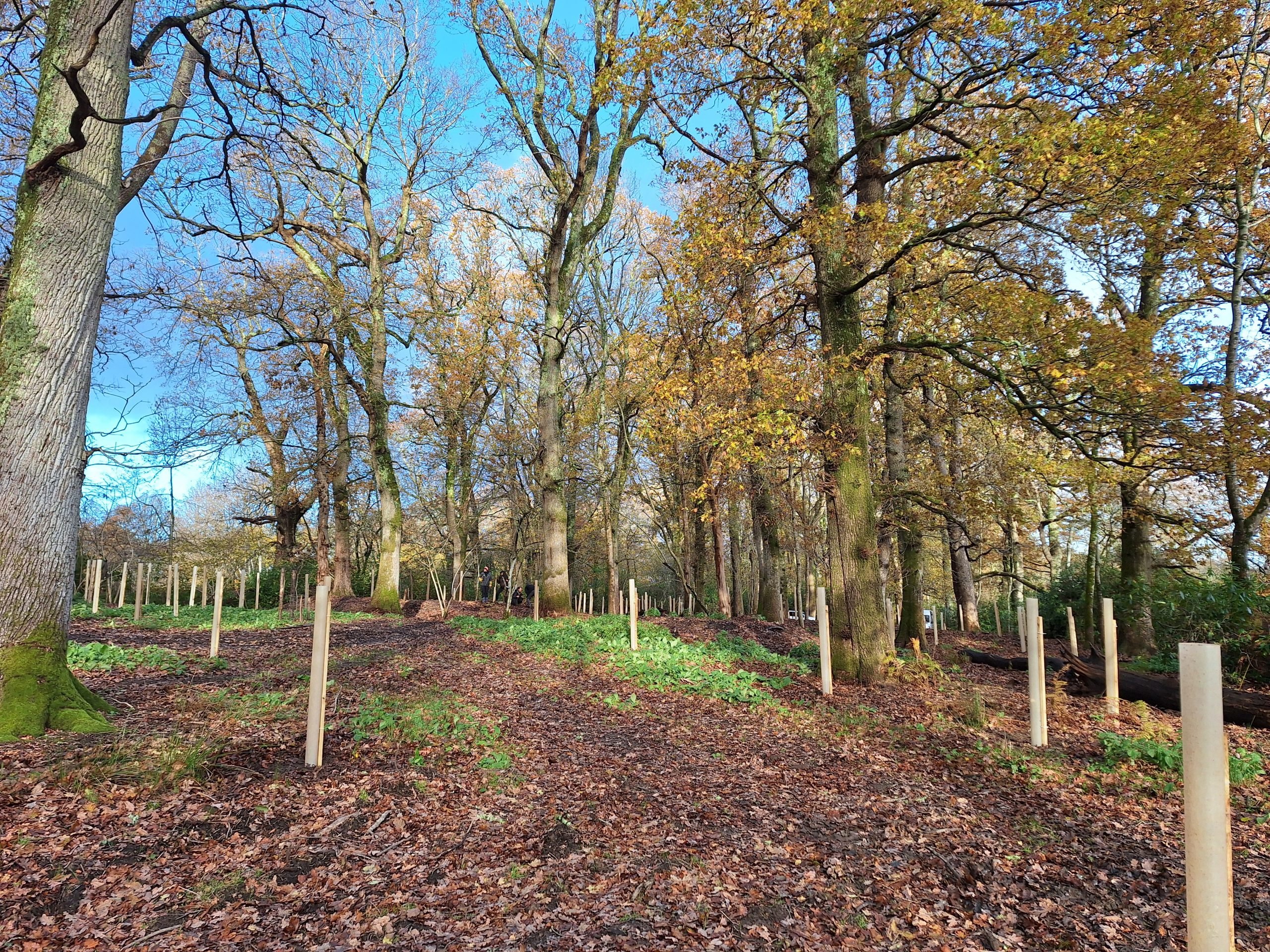
The area on a site near Bramshaw was previously swamped by invasive rhododendron but creating new woodland through a diverse collection of saplings is intended to boost its biodiversity and ultimately, to allow people to enjoy alongside new species and wildlife.
The tree planting work was carried out through the New Forest National Park Authority-led Species Survival Fund (SSF) project – a two-year initiative to boost nature in the New Forest by restoring and expanding habitats.
The privately owned site is one of 32 sites featured in the £1.3million scheme, which is enhancing 250 hectares of land in the Forest – equivalent to 350 football pitches.
What was once overgrown shrubland and masses of rhododendron bushes as far as the eye could see is now a clearer and more diverse landscape thanks to the efforts of volunteers.
‘My vision for the land is to try and create an environment where wildlife can thrive, but also people can coexist,’ said landowner Matthew Cutts.
‘It feels a shame to create an environment where we feel that we’re separate from animals and that we can’t be there.
‘I’m a woodcarver, I have a fine art background so one of the reasons I bought the land was to carve. You can’t really do that in urban areas because the noise of the chiselling and filing drives everyone away.
‘It’s a wonderful thing to do out in the landscape. And the lovely thing about working just with hand tools out in the open is all the banging and scraping kind of mimics a lot of noises that animals make when they’re searching for food, so it actually attracts animals.
‘I have this dream that it could be this open-air space where people could spend time working in the woods, but in a way that went hand in hand with nature to show there are ways of living side by side with animals.’

The New Forest is a globally important landscape for wildlife but increasingly the Forest and those who inhabit it are faced with a whole host of challenges from habitats being lost and people pressure, to the changing climate and ageing tree populations.
Woodland is far from being simply part of the Forest backdrop, it provides infrastructure to so much life in the Forest and creating a new wooded area serves a crucial ecological purpose.
Volunteers planted a range of tree species including oak, Dutch elm disease-resistant elm and crab apple to help create a more diverse and natural environment.
‘We are trying to bring in some more diversity in woodland species, and in the woodland structure to attract a variety of wildlife,’ explained SSF project officer Jane Nordstrom.
‘Maintaining the ecological diversity of woodlands in the long term, often means the need for occasional management intervention, but I would hope, with the underplanting now taking place, to see a notable understorey developing here in about five years’ time and new canopy replacement trees emerging.
‘The idea is that we will have a more mixed upper tree canopy, the shrub understorey and the recovery of a more diverse ground layer.
‘Due to rhododendron, the recovery of ground flora naturally does tend to take a very long time because of the remaining toxins in the soil, but it does happen eventually.
‘The recovery can take a long time which is why actually helping it along its way by planting trees is a valuable thing to do.’

Birdsong echoes around the landscape amid the plunging of shovels and hammering of tree guards into the ground, with Matthew’s dream of bringing back in new wildlife among people already taking effect.
For those taking part in the session, which is led by the NPA’s engagement team, it is a chance for members of the public to do their bit to help protect the New Forest and the environment more generally.
‘I’ve been volunteering for about eight years,’ said volunteer Paul Willcox. ‘I retired early and I wanted to put something back in the community.
‘I love being in the outdoors. It brings me back into nature, which is under threat everywhere.
‘Volunteering schemes are vital – this generation has got a responsibility for planting for future generations because they are going to be around a lot longer than we are.’
The importance of volunteers on projects like SSF cannot be underestimated, with every contribution critical to preserving the landscape and the species that depend on it.
In just a few hours, this formerly sparse woodland has been strengthened by 250 new saplings, helping to restore woodland structure, increase resilience and set the foundations for a thriving Forest in the years ahead.

Katie Barrow, youth engagement co-ordinator for the NPA, added: ‘It’s such an important thing to have volunteers able to help on projects like this because they get to see what’s happening in the Forest around places that are local to where they live and they enjoy doing it.
‘They have such a great day. It really feels like you’re making a massive contribution to conservation when you can come out and actually get plants in the ground.
‘They can meet lots of new, like-minded people and they potentially get sign posted on to other things that they might enjoy doing in their time as well.
‘So they might make connections with the landowners or they might discover that this activity is what they really enjoy doing and they can go and find more of it with other organisations.
‘It’s also just incredibly valuable to us at the NPA and it really wouldn’t be possible to do everything without them.’
Along with the NPA, the five organisations involved in the £1.3million SSF project are Freshwater Habitats Trust, Amphibian and Reptile Conservation Trust, Hampshire and Isle of Wight Wildlife Trust, Wild New Forest and New Forest Commoners’ Defence Association – supported by the RSPB and the New Forest Biodiversity Forum.
Some of the other work carried out by the partners includes planting hedgerows, seeding wildflower meadows and offering practical management advice to landowners in the Forest to mitigate the impacts of climate change.
This project is funded by the Government’s Species Survival Fund. The fund was developed by Defra and its Arm’s-Length Bodies. It is being delivered by The National Lottery Heritage Fund in partnership with Natural England and the Environment Agency.