spider

Spiders

It's 16:30 Clear sky, 8°C
Scroll

Spiders

Spiders fill a vital niche in the New Forest, and helping to regulate the numbers of insects is just one of their roles. They’re an important food source for many birds, and some birds use spiders’ webs to help ‘glue’ their nests together. The New Forest with its varying habitats is a vital natural resource for a huge number of wildlife species – including spiders.

Spiders can be divided into hunters (those that actively seek out and catch their prey) and web builders (those that sit and wait for their prey to get caught in the web). Some live on the ground out in the open heaths and forest floors, some among the bushes and ancient trees and some prefer to share our homes! Unlike insects, spiders have just two main body parts: a cephalothorax at the front (including the head, where the legs attach) and an abdomen at the back.

All spiders have piercing mouth parts, and a poisonous venom that paralyses their prey, but is largely just an irritant to humans if bitten. However, most spiders are timid and prefer to run or even feign death rather than fight a large opponent! You can find spiders at any time of year but since they mostly feed on insects, which tend to be most active in warmer months, it’s best to look in the summer and autumn. In the New Forest, spiders’ webs are particularly conspicuous on cool, damp autumn mornings when the droplets of dew glisten in the sunlight.

Of about 650 spider species found in the UK, about 450 live in the New Forest. Here we feature just a small selection of common and more specialist species.
Crab-Spider-Denise-Pichler

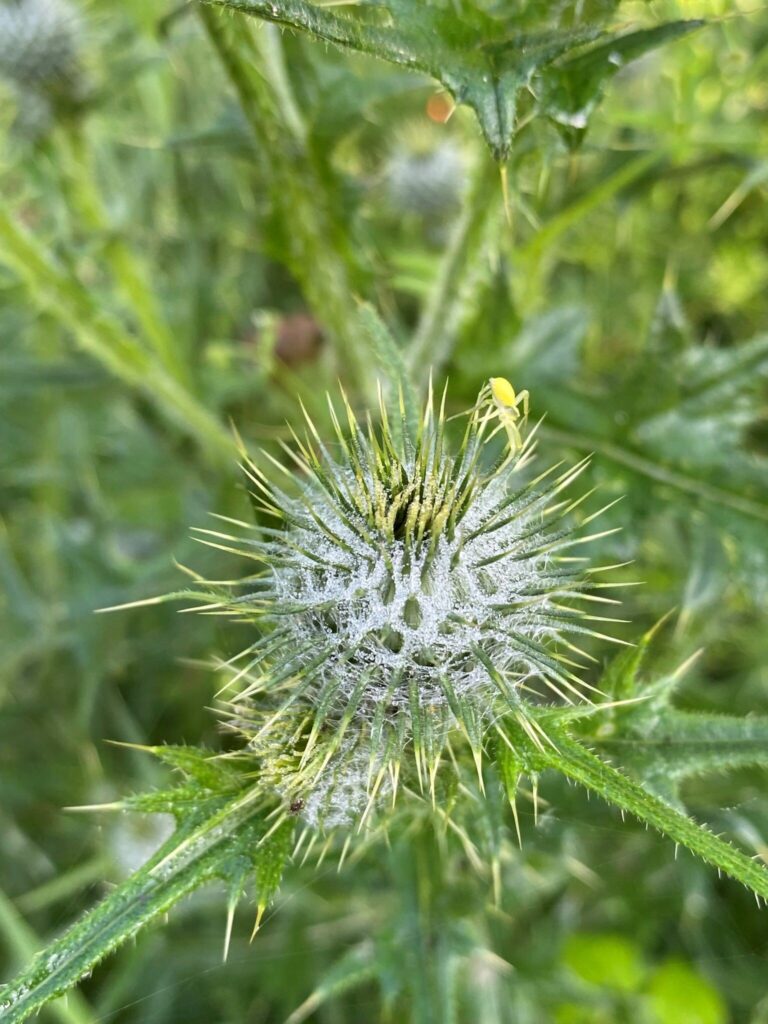
Crab Spider

With its long front legs arranged in a crab-like fashion, the crab spider is the most common ‘flower spider’. The female is larger and most often to be found snacking on bees, moths or flies.

Crab spiders don’t spin webs to trap insects but instead use ambush and camouflage to capture prey. Whether a flower is yellow, white, pale green or pink, female crab spiders can change their colour to match. If you see them spinning a web, it’s to hold their eggs.

Misumena vatia

Photo credit: Denise Pichler

Garden-spider-Araneus-diadematus.-1

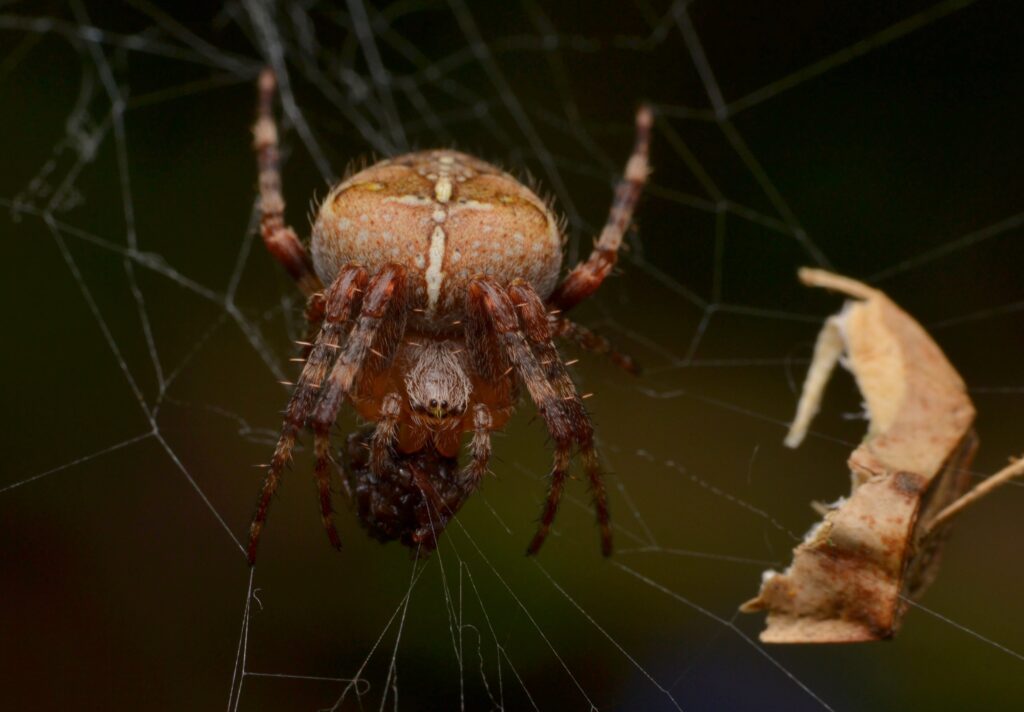
Garden Spider

The garden spider is one of the New Forest’s most common orb-web spiders and their sticky wheel-shaped webs are the most familiar looking. It lays egg sacs in vegetation or in outbuildings. When the egg sacs hatch they are filled with tiny yellow and black spiderlings that cluster together and can quickly disperse. They build minute orb webs in the garden and trap many greenfly. As they get bigger so does the size of the web and prey.

In late summer the previous year’s hatchlings become bigger, especially the females as they swell up with the egg mass inside their abdomens. This is when their orb webs tend to dominate our gardens and the wider countryside.

Araneus diadematus

Photo credit: Tone Killick

Common-House-spider-Tegenaria-domestica

House Spider

(Also known as collared snake, common snake, green snake, hedge snake, ringed snake, water snake)

The house spider is an indoor visitor that prowls around the house at night looking for prey. They often slip into a bath looking for a drop of water around the plug hole but they do not have sticky feet, so they get trapped. A strip of loo paper weighted at one end and dangled into the bath makes an ideal spider ladder so they can get out again.

In August/September the males mature and wander around the house in the evening looking for a prospective mate. They often get caught by cats and because of their longer leg size (up to 230mm from toe to toe) they are unpopular with arachnophobic humans!

Tegenaria domestica

Photo credit: Tone Killick


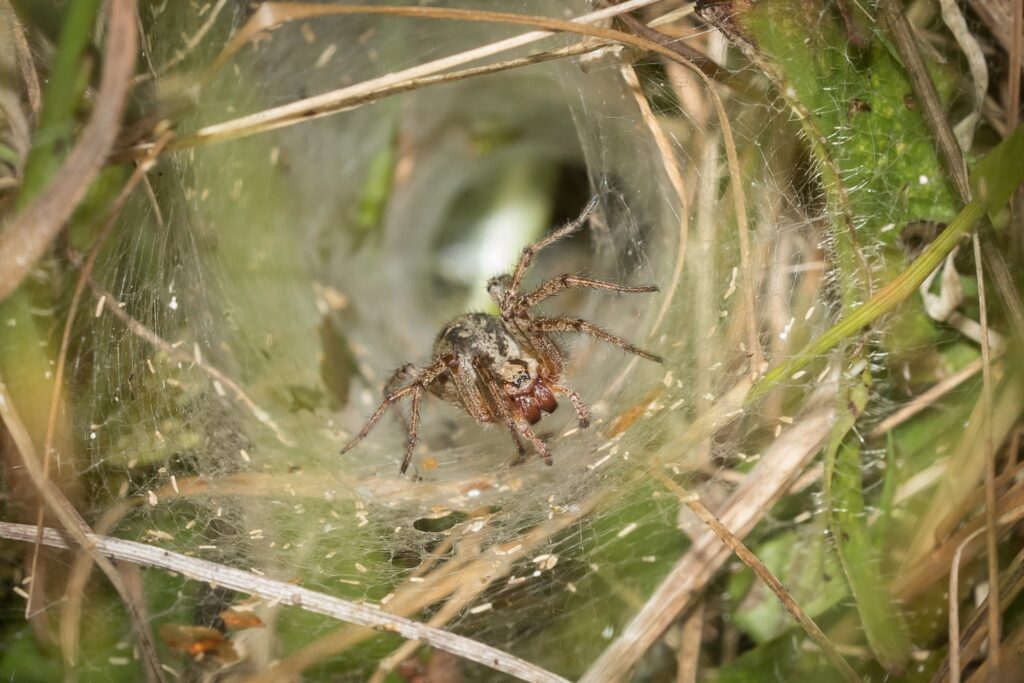
Labyrinth-Spider-Anne-Richardson

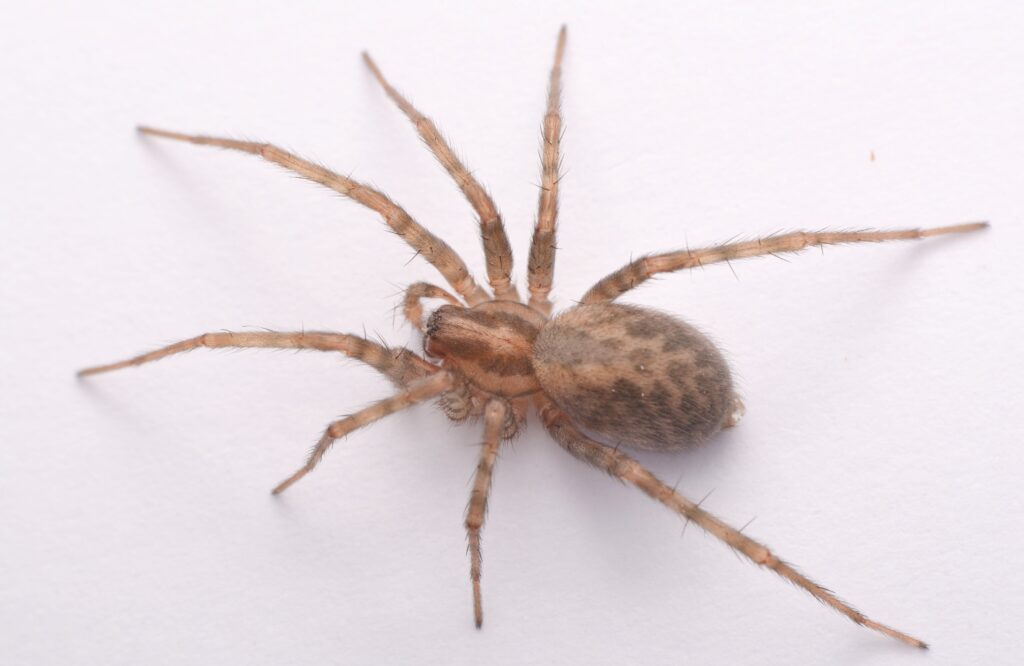
Labyrinth Spider

The labyrinth spider is related to our British house spider (the one often found in baths and sinks), and builds its conical web in low undergrowth and bushes. The spider sits at the bottom of the funnel but comes to investigate when it feels the web vibrate with a struggling insect caught in it.

The male will try to approach a female in her web but will only be brave enough to mate if she seems receptive.

Also sometimes referred to as a funnel-web spider, it is totally unrelated to the dangerous Sydney funnel-web spider which lives in Australia.

Agelena labyrinthica

Photo credit: Anne Richardson

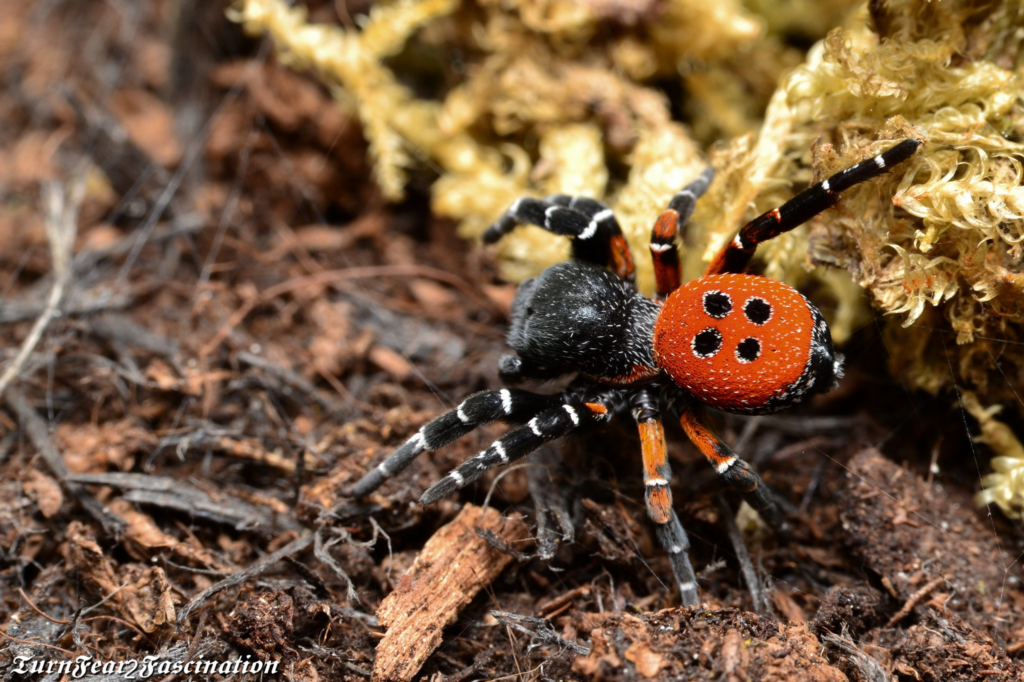
Ladybird-Spider-Tone-Killick

Ladybird Spider

The ladybird spider was recently re-discovered in Dorset heathland following a period of presumed extinction. Its population is expanding, so it’s worth looking out for it in the New Forest. If you find one you may only photograph it and must report any sightings to Forestry England in Lyndhurst.

The male is coloured with tiny red and black hairs, and with tiny white rings at its leg joints. Its abdominal markings are also similar to those of a ladybird (hence its name). The female is considerably larger and is totally black

Eresus sandaliatus

Photo credit: Tone Killick

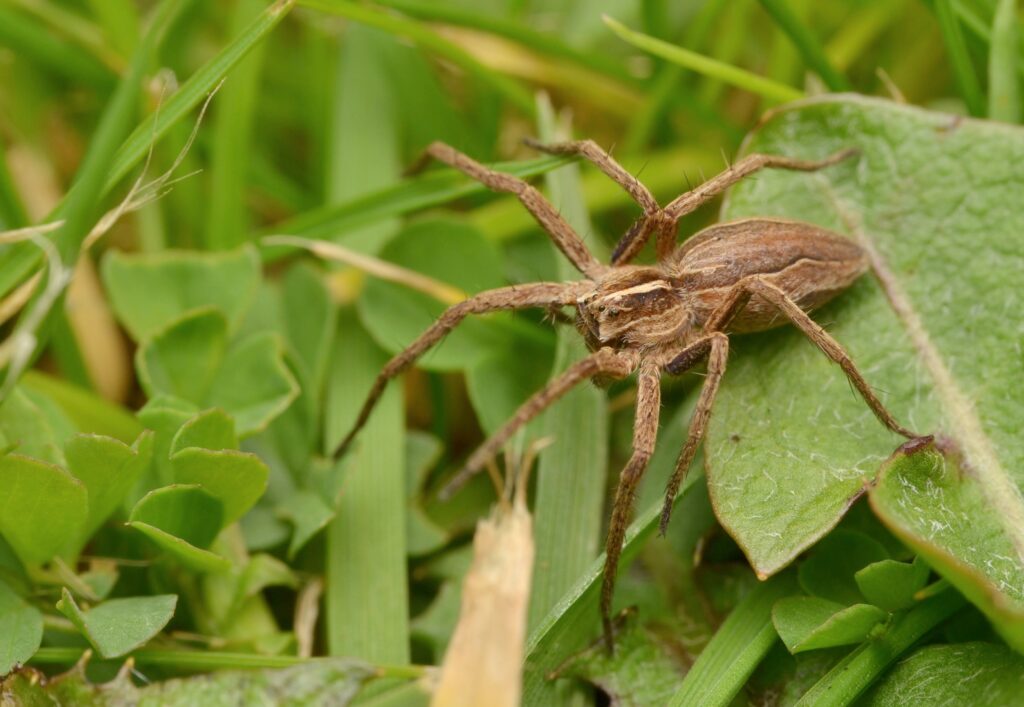
Nursery-Web-spider-Pisaura-mirabilis.

Nursery Spider

Another spider often found wandering in grasses is the nursery spider.

The female lays her egg sac in the early summer and wraps it in silk. She then carries this white ‘ball’ of wrapped eggs to a suitable spot where she binds grass stems together using her silk to form a protective dome. She deposits her egg sac under the dome and stands guard over it until the babies have hatched and gone – hence her name.

The slightly smaller male normally presents her with a silk-wrapped prey item during mating just in case she might be hungry and decides to eat him instead.

Pisaura mirabilis

Photo credit: Tone Killick

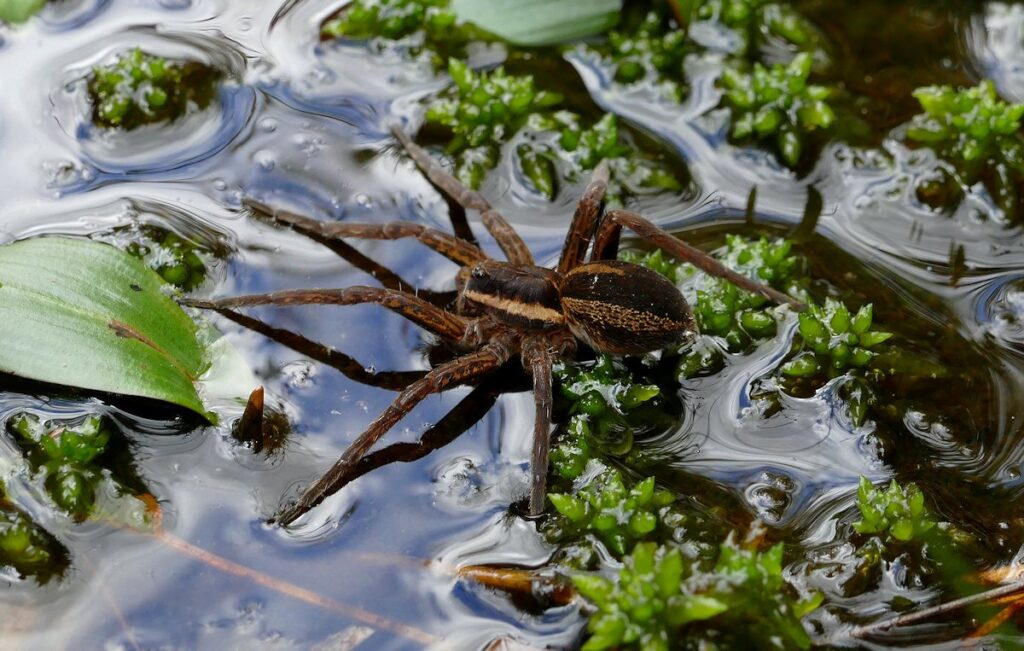
Raft-Spider-in-New-Forest-Olly-Frampton

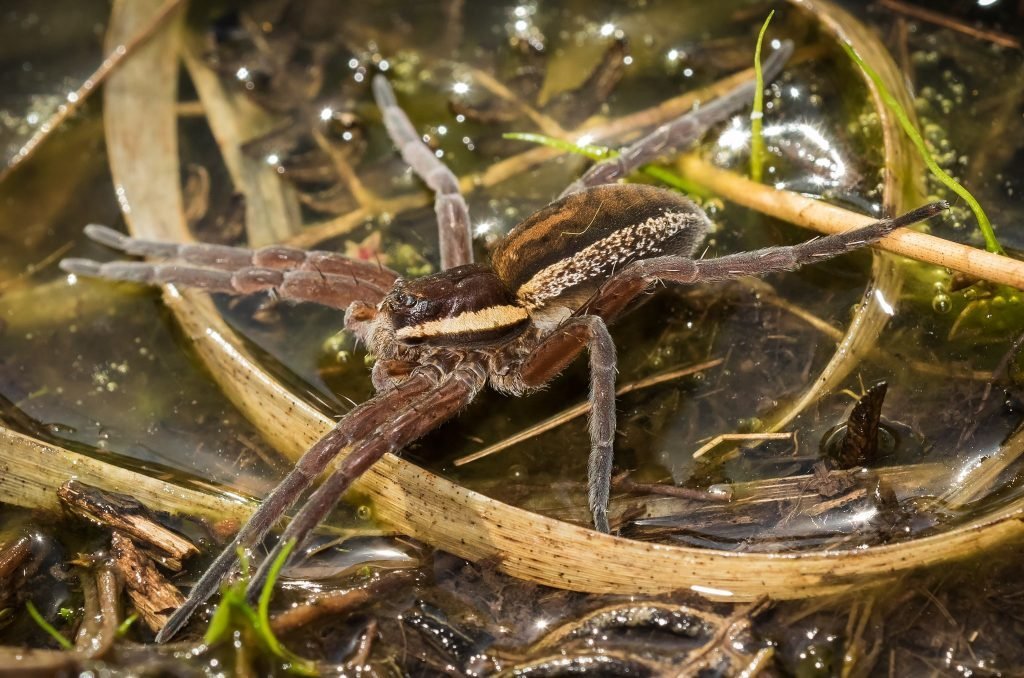
Raft Spider

The raft spider is closely related to the nursery spider and has a similar life cycle, guarding its eggs until they hatch.

It gets its name from its normal habitat, near water where it can skate on the surface – though with slightly less control than a pond skater. The raft spider can also live underwater for up to about 20 minutes. It can even catch underwater prey including small fish as well as thirsty flies and other surface insects.

Dolomedes fimbriatus

Photo credit: Olly Frampton

Wasp-Spider-Anne-Richardson-1

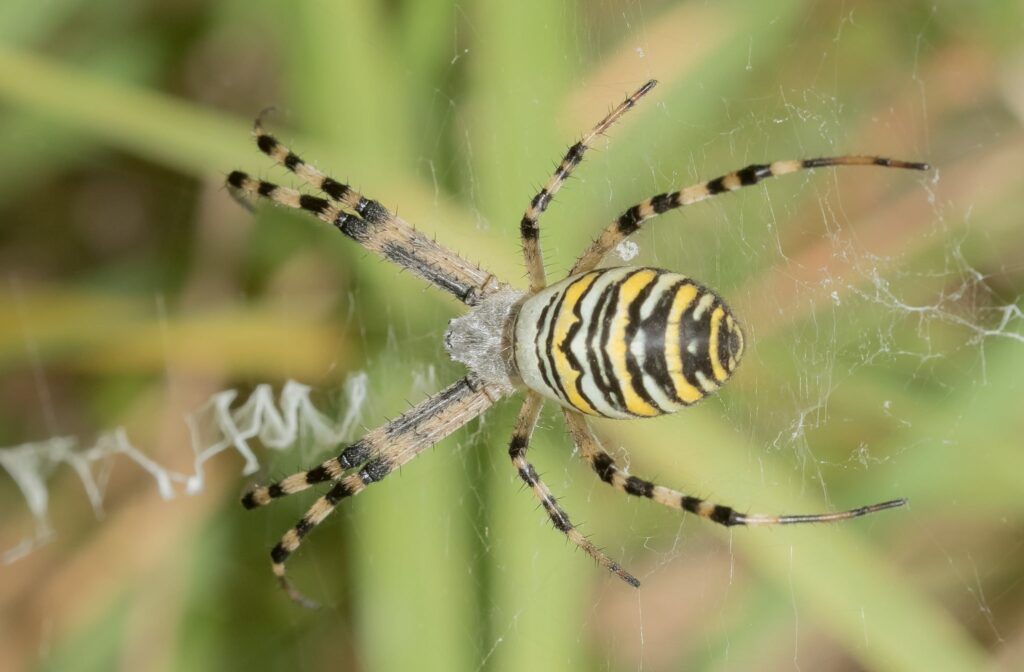
Wasp Spider

The wasp spider is thought to have originated in the Mediterranean and was first seen in the extreme south west of England in the 1920’s. It is now well-established in the New Forest. At 4mm in size, the male is considerably smaller than the female, which reaches 15mm across when she is carrying eggs.

It’s not only the silvery cephalothorax and yellow, white and black banded abdomen that is striking but also the zig-zag of silk, known as a stabilimentum that it spins. This makes the web more elastic and easier to trap and keep hold of its prey – like rather strong and energetic grasshoppers and crickets.

Argiope bruennichi  

Photo credit: Anne Richardson

Wolf-spider-Alopecosa-pulverulenta (1)

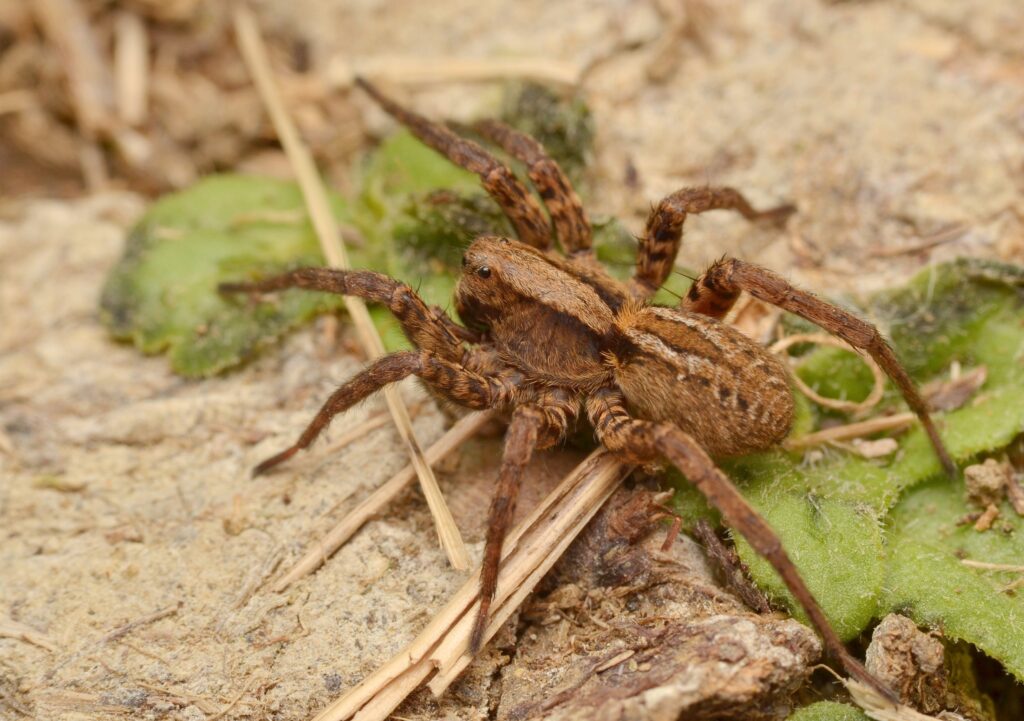
Wolf Spider

Wolf spiders are among the most prolific hunting (non-web spinning) spiders. They are one of many species that scuttle around on forest floors and in gardens.

In spring the males rush around, waving their palps up and down, to signal to a prospective female that they are willing to mate.

Once mated the female makes her egg sac, wraps it in silk, attaches it to her abdomen and carries it with her. The sac looks rather like a pale secondary abdomen.

After the babies hatch, they are carried on her back until they eventually fall off and make their own way in the world.

Pardosa spp

Photo credit: Tone Killick

Keep your distance from the animals and don't feed or pet them - you may be fined.

Keep your distance from the animals and don't feed or pet them - you may be fined.

Keep your distance from the animals and don't feed or pet them - you may be fined.

Keep your distance from the animals and don't feed or pet them - you may be fined.