Reptiles
Reptiles
The New Forest National Park is home to all six of the UK’s native reptile species:
- Adder
- Sand lizard
- Slow-worm
- Grass snake
- Common lizard
- Smooth snake.
Reptiles are cold-blooded vertebrates with dry skins, and they derive their body heat directly from their environment. They like to bask in warm, dry areas with good surrounding cover so that they can escape if a predator approaches. Open areas with sandy soils that heat up quickly are the best habitats for them and this makes the New Forest with its heathlands an ideal area.
Heathland destruction elsewhere means that the New Forest has become an important haven for them. In winter they hibernate underground and emerge again the following spring.
Lizards are carnivorous. They have eyelids and can therefore blink, unlike snakes. They can shed their tails when they are attacked; the tail will re-grow.
Snakes are legless reptiles: as they grow they shed their old skin, which peels away as a papery cast of the animal’s body.
If you want to see a snake or lizard in its natural environment, try looking on south-facing slopes, on logs, along the edge of scrub and in areas with mature heather.
All of the native reptile species can be viewed at Forestry England’s New Forest Reptile Centre, near Lyndhurst.
Find out more with the Reptiles of the New Forest leaflet here
Adder
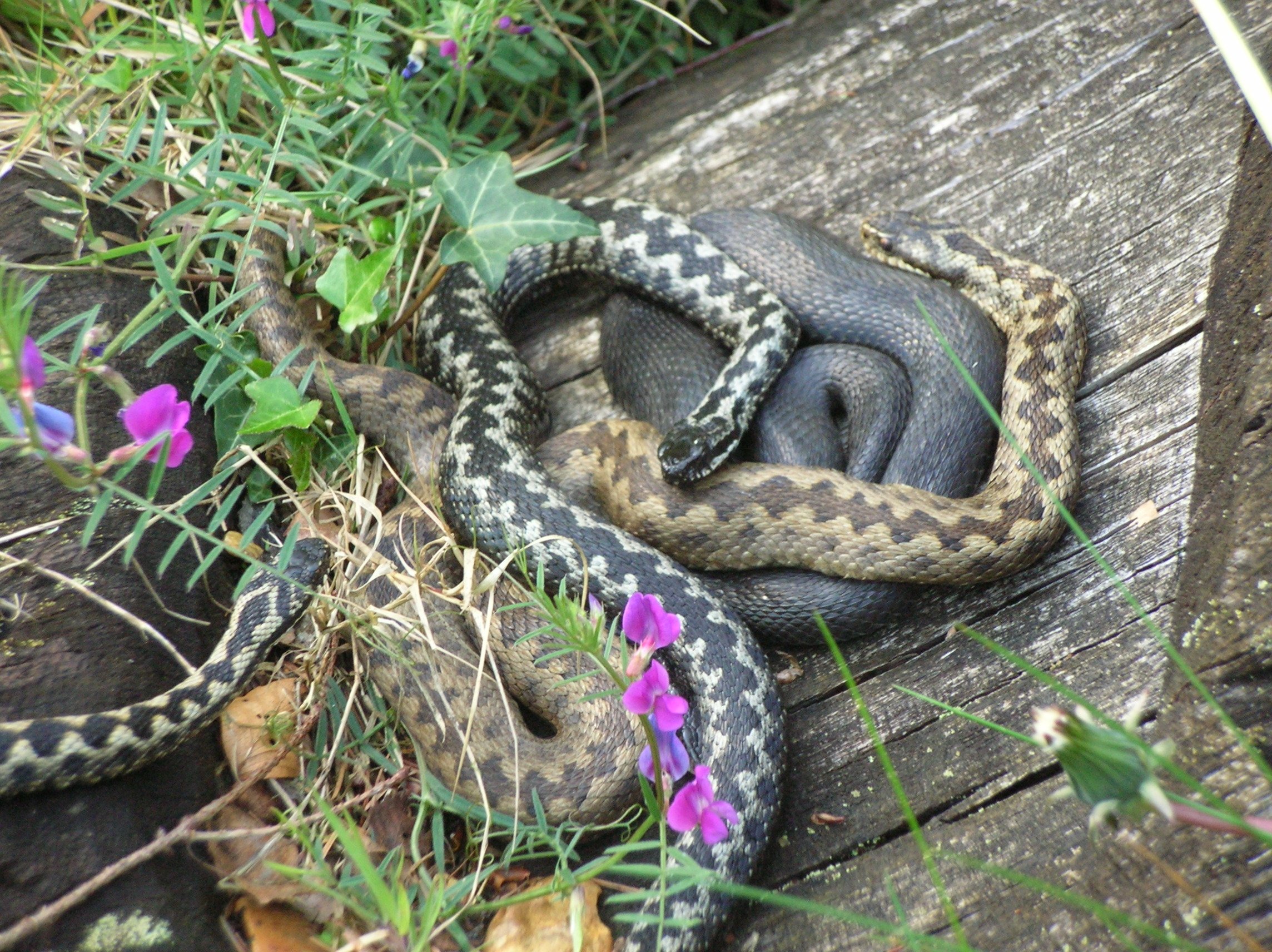
Adders are common and widespread in the open areas of the New Forest. They are found throughout England, Scotland and Wales, but are absent from Ireland. The adder is Britain’s only venomous snake. The name originates from the Old English naedre, meaning a snake or creeping thing; the ‘n’ was lost in Middle English and hence the name adder came into being.
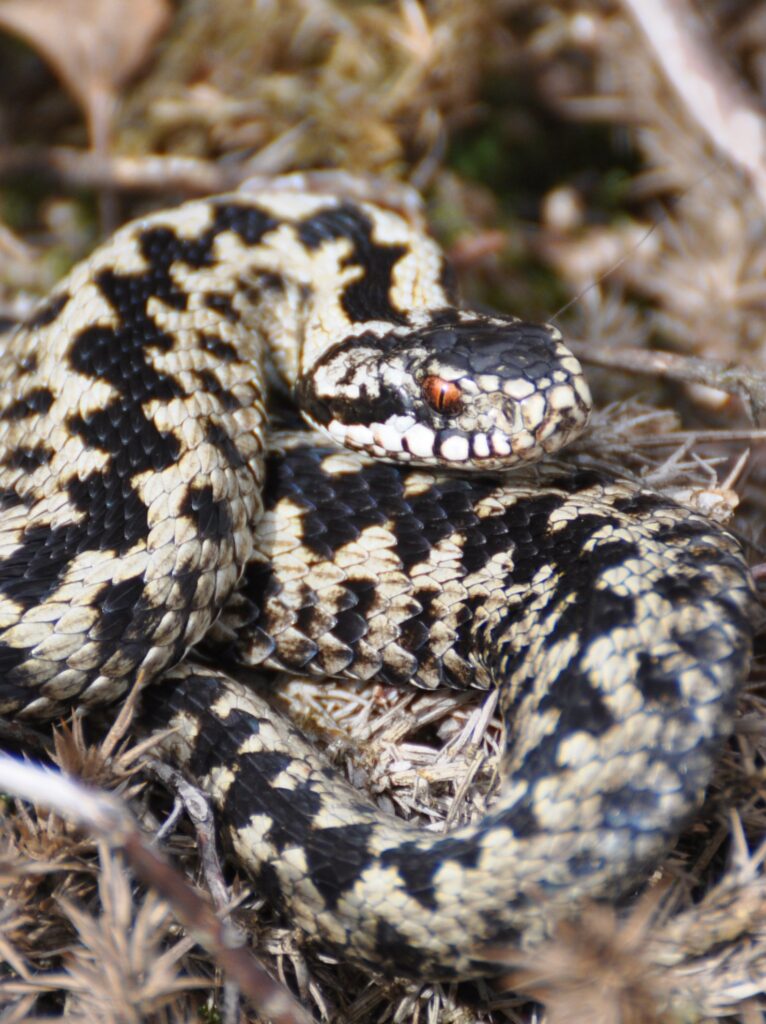
Adders live in heathland, open woodland and rough grassland and avoid woodlands and upland areas. Look for them in any areas of open heath, but the best places are where there is an open, south-facing bank, such as along parts of the old railway line between Burley and Brockenhurst. Sunny mornings are best, especially in early spring.
Adders will only bite if they feel threatened or are provoked. Bites to humans are rarely life-threatening but medical attention should be sought. If your dog is bitten by an adder, take it to a vet immediately.
Traditional cures for adder bites were the fat from another adder that had recently been deep fried. Folk remedies are legion: the ‘bag of heads’ was a bag containing the heads of an adder, a toad and a newt, and was still being used as a general aid to healing as recently as the late 19 century. The bag was dipped in water and the water that ran out when it was lifted up was applied to the affected part.
Common Lizard
Common lizards are the most commonly seen reptile in the New Forest. They are found throughout the UK, except in upland areas.
Common lizards inhabit open heath and grassland, woodland glades and sometimes gardens. On sunny days between April and October look for them on prominent sunning positions such as logs, tree stumps, grass tussocks or the edges of paths. They will dart off quickly, but if you wait quietly they will often return.
Common lizards prey on insects, spiders and earthworms and live for up to eight years.
Grass Snake
(Also known as collared snake, common snake, green snake, hedge snake, ringed snake, water snake)
Grass snakes are fairly common in damper, open areas throughout the New Forest. In the UK they are found in lowland England and Wales, but are scarce in Scotland.
Grass snakes favour rough grassland and meadows, and are never far from watery places where they can hunt for frogs, toads, newts and fish. They are excellent swimmers. Look for them in boggy areas, streams and around the larger ponds, such as Hatchet Pond. They can also be seen in gardens with ponds or compost heaps.
Grass snakes live for 10 to 15 years. They are completely harmless to people and do not have a venomous bite. If they feel threatened they can hiss and even pretend to strike. If that does not work they will play dead and emit a foul-smelling liquid if they are handled!
Sand Lizard
Sand lizards have never been widespread or common in the New Forest and they became extinct here in the 1970s. A captive breeding programme was started by Forestry England in the 1980s and they were re-introduced into one or two sites in the 1990s.
The heaths of Hampshire, Dorset and Surrey are the stronghold of sand lizards in the UK with just a scattering of sites elsewhere in England and Wales and only one Scottish site.
Their habitat is undisturbed heathland and they are under threat from development, wildfires and lack of appropriate management leading to the growth of trees, scrub and bracken. They are particularly vulnerable to changes affecting the warm, sandy sites where the female buries her eggs. It is important that their heathland habitat is kept open by animals grazing or by felling invading trees. The re-introduction sites are not made public so that the sand lizards are not disturbed.
Sand lizards live for up to 10 years on a diet of earthworms, spiders and insects such as flies and beetles. The re-introduction programme seems to be a success with sand lizards now breeding in one area of the New Forest again.
Slow Worm
(Also known as blind worm, deaf-adder)
In the New Forest slow-worms are found throughout the damper and more heathy areas. They are also common in grasslands and gardens within villages, but are not often seen. In the UK they are found throughout lowland England, Scotland and Wales.
Unlike other British reptiles they do not bask in the sun, but share with amphibians a fondness for cool, damp places, such as open woods, damp heaths, rough grassland and meadows with hedges and scrub. They are also found in gardens, especially compost heaps, and their fondness for slugs and snails makes them the gardener’s friend. You are probably just as likely to see one in your garden as in the New Forest.
Slow-worms are thought to be the longest-lived of all lizards – the age of 54 years has been reliably recorded, although the normal lifespan is around 15 years.
Smooth Snake
Smooth snakes live throughout the heathy areas of the New Forest, but are very seldom seen. In the UK they are extremely rare and are restricted to the heathlands of Dorset, Hampshire, Sussex and Surrey. Areas of the Forest are so important for them that they have been given international nature conservation protection.
Smooth snakes live on heathlands with mature heather. They will also visit woodland edges and boggy areas in search of food. Your best chance of seeing a smooth snake will be to slowly and quietly search south-facing heathery slopes. Search on a sunny morning when they are likely to be basking. You will need patience and luck!
The smooth snake eats lizards (including the equally rare sand lizard), small rodents and other snakes such as young adders. It is not venomous and uses one or two coils to restrain its prey although it is not a true constrictor like a python. It can live for 20 years.